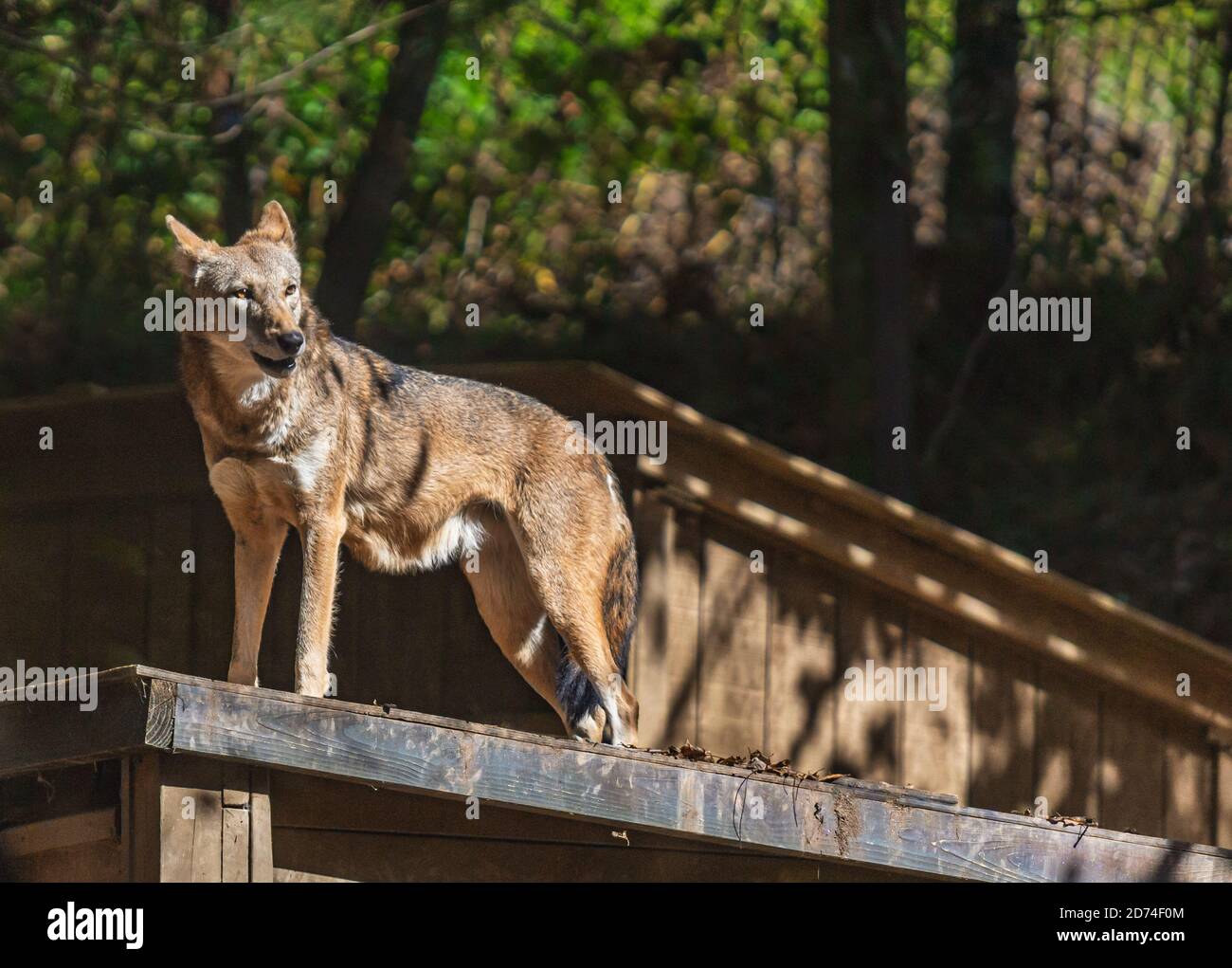
The Red Wolf: A Conservation Achievement at WNC Nature Center
The red wolf (Canis rufus) ranks among the most critically endangered canids globally, with fewer than 100 individuals remaining in the wild near the North Carolina coast. This severely endangered species is the target of a Species Survival Plan (SSP) captive breeding initiative aimed at facilitating its recovery. The WNC Nature Center in Asheville, North Carolina, stands out as a primary participant in this essential conservation initiative.
On April 28, 2023, the WNC Nature Center marked an important achievement with the arrival of nine red wolf pups born to Oak and Gloria, two three-year-old wolves. This milestone signifies a positive advancement for the species, as these pups enhance the genetic diversity vital for the survival of red wolves. Visitors to the Nature Center may soon have the chance to witness these young wolves as they start to explore their habitat.
The red wolf depicted in the accompanying image is Mayo, a resident of the WNC Nature Center during a volunteer’s stay. In 2012, Mayo had a litter of four puppies, further adding to the genetic pool of this endangered species. Such births not only delight visitors but also play an important role in the preservation of red wolves.
Encountering a red wolf in its natural habitat is infrequent, with sporadic sightings noted in the Alligator River National Wildlife Refuge. For those interested in observing these majestic animals, visiting a zoo or nature center involved in the red wolf captive breeding program is the optimal choice. The Red Wolf Coalition offers a comprehensive list of 42 accredited facilities throughout the U.S. where red wolves can be observed.
The WNC Nature Center’s initiatives in red wolf conservation underscore the significance of captive breeding programs in safeguarding endangered species. As these efforts continue to progress, there is hope that the red wolf population will rebound and flourish once again in their natural environment.