Did you know that numerous hotels prohibit guests with local addresses from staying, and they may even revoke confirmed reservations? This policy is more prevalent than many are aware of, and it’s currently gaining traction on social media after a guest had their reservation canceled.
Hampton Inn hotel restricts locals residing within 50 miles
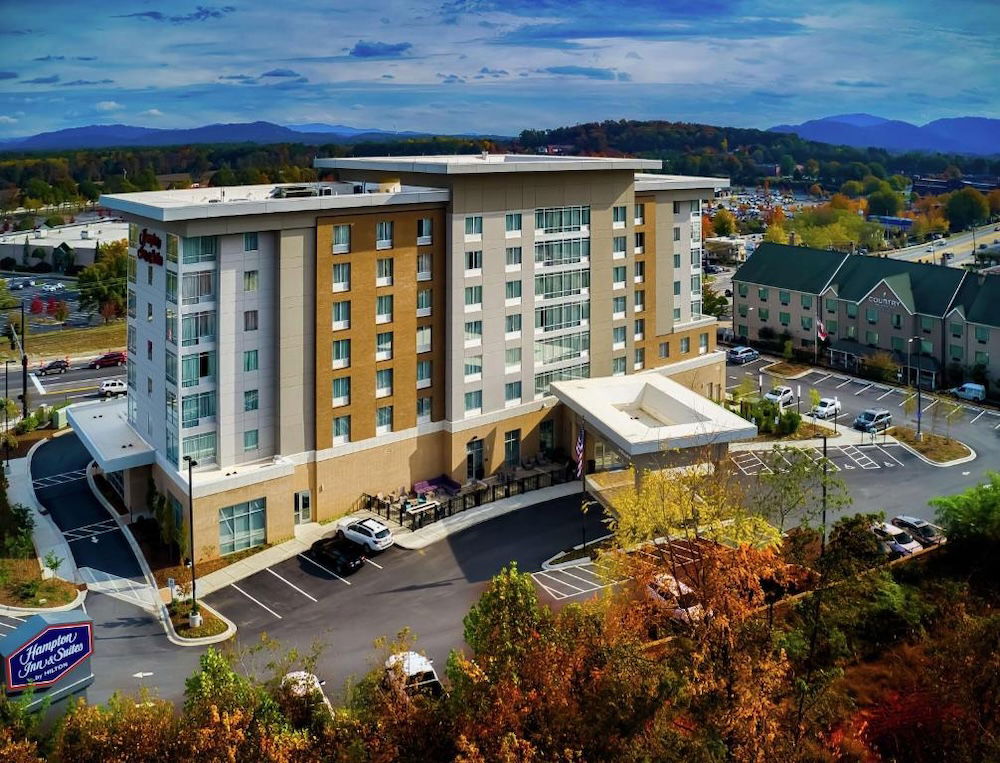
A user on Bluesky recounted a frustrating incident online, while redeeming Hilton Honors points for a stay at the Hampton Inn in Asheville, North Carolina. He shared that the hotel canceled his family’s booking because the address on his Hilton Honors account (wrongly) indicated an old address within 50 miles of the hotel.
When he inquired about the cancellation of his reservation, he was informed it was “due to our homeless population,” with the staff member adding that most hotels in the vicinity have similar policies.
There’s a sign in the lobby that affirms this policy exists:
This hotel retains the right to deny occupancy to those residing within 50 miles. Exceptions are as follows: natural disaster, inclement weather, or power outage which creates hazardous conditions. Any exceptions must receive management evaluation for approval.
He emphasizes that what’s most unsettling about the interaction was “the sheer casualness of ‘because of our homeless population,’ as if those experiencing homelessness were *clearly* individuals to be excluded.”
He also mentions how “if you’re a family evicted from your apartment, or a mother escaping domestic violence with her children, or someone without a home trying to secure shelter for a night,” you’re unwelcome at numerous hotels.
Interestingly, the person recounting this incident is also the writer of a book titled “There Is No Place for Us: Working and Homeless in America.”
This hotel policy is relatively common, but is it justifiable?
This is far from the first time I’ve heard of a hotel prohibiting local guests. I’d argue it’s even fairly typical at limited service properties in (comparatively) smaller cities and suburban regions.
Of course, there’s a notable irony for those in the miles & points community, since many of us are known to do mattress runs, wherein we check into hotels to attain elite nights, often locally.
On the surface, it appears highly unethical and irrational to have such a policy, if you ask me. There are countless reasonable circumstances where someone might need accommodation, which doesn’t pertain to natural disasters, inclement weather, or power outages. For instance, on a very basic and “innocent” level, what if you were simply having a disagreement with your spouse, and want a little space for a night (not considering much more serious situations where a room may be necessary)?
What is the actual concern? It’s intriguing how this policy was explicitly attributed to the “homeless population,” as I could foresee equal concerns regarding high schoolers throwing a party and damaging a room, locals booking a hotel for an affair, etc. If an otherwise unhoused individual is willing to pay the hotel’s fee, then what, specifically, is the issue?
The policy certainly doesn’t sit well with me, and I can understand the outrage. I’m just curious about the other perspective, and what the specific concern is that leads so many hotels to adopt such a rule.
Conclusion
A Hampton Inn in Asheville, North Carolina, revoked a guest’s reservation, as the address on record for his Hilton Honors account was “local.” The hotel enforces a policy that bans guests with addresses within 50 miles, except for limited exceptions. The hotel staff allegedly attributed this to the “homeless population.”
As you might expect, this policy has not been well-received by many. Nevertheless, it’s more common than you might think.
What is your opinion on this hotel policy that bans locals?