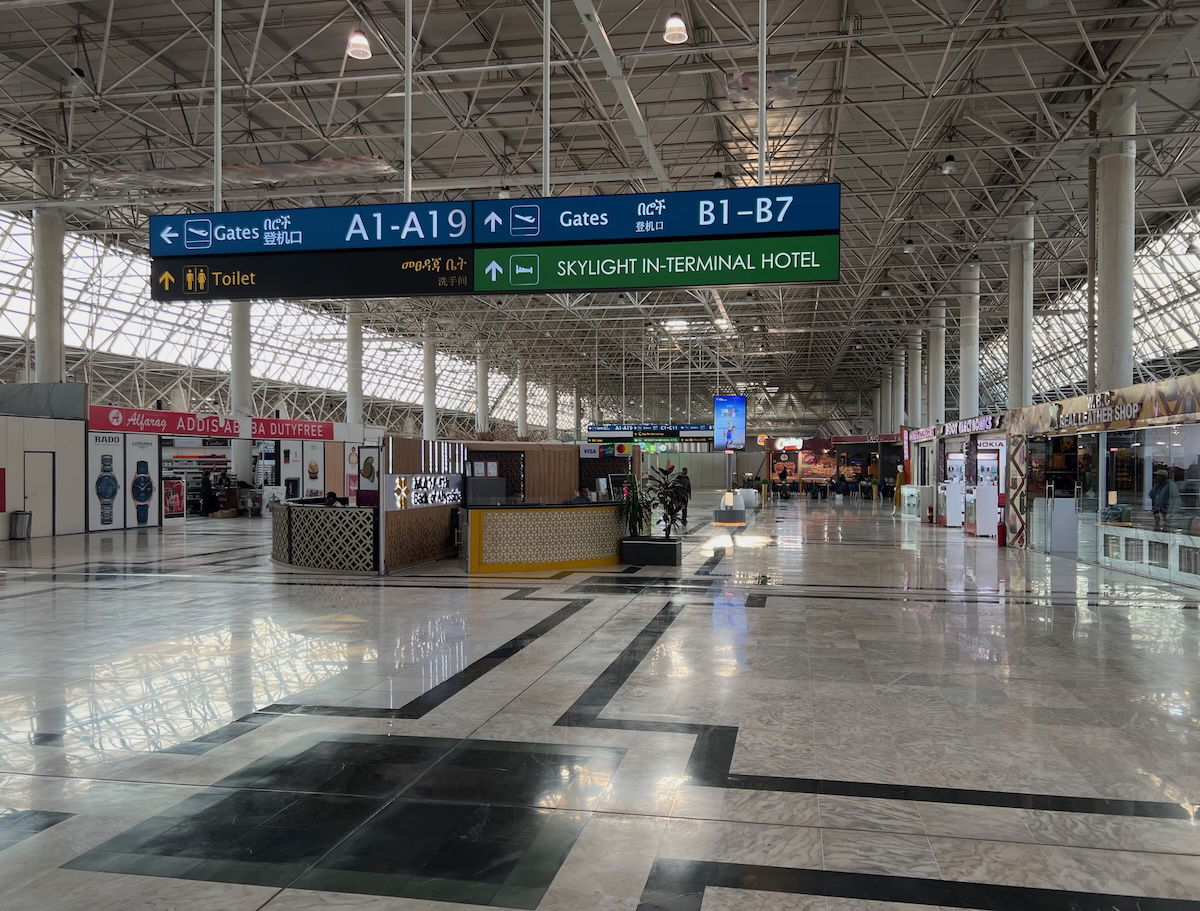
In recent years, discussions regarding a new international airport in Ethiopia have emerged, promising to significantly benefit not just Ethiopian Airlines but the entire region. Exciting progress is now being reported as the construction phase has commenced, allowing the facility to begin its development.
Addis Ababa airport capacity set to increase significantly
The groundbreaking of a new airport located near Addis Ababa has begun, and it is anticipated to become the largest airport in Africa, with an estimated cost of $12.5 billion.
The airport will be inaugurated in stages — initially accommodating up to 60 million passengers each year, and once fully operational, it will serve 110 million passengers annually. The facility is projected to include four runways and parking space for 270 aircraft, likely with many at remote stands.
Although initial announcements regarding the airport were made in 2018, development was slow, largely due to the pandemic. In 2024, Ethiopia advanced these plans, and we are now witnessing the start of construction. Ethiopian Airlines, the national carrier, supports this initiative and anticipates the airport will be operational by 2030.
The new airport is set to be situated in Bishoftu, approximately 30 miles from Addis Ababa, with arrangements for seamless transportation between the city and the airport.
It’s worth noting that while the groundbreaking has occurred, complete financing has not yet been finalized, although there is reported interest from global investors. Therefore, I would hesitate to view this project as absolutely certain, and the 2030 timeline appears overly optimistic to me.
Ethiopian Airlines CEO Mesfin Tasew shared his thoughts on the initiative:
“This is indeed a significant moment for Ethiopian Airlines and for Africa as a whole. We are starting a new chapter with the groundbreaking of Bishoftu International Airport, which will transform the aviation landscape of the continent. As we celebrate 80 years of service, this project represents another milestone, highlighting our dedication to advancing the future of air transport in Africa and meeting the increasing demand for our passenger and cargo services. Bishoftu International Airport is an important move towards closing the infrastructural gap in Africa and is essential for the implementation of the African Continental Free Trade Area (AfCFTA). At Ethiopian, we are committed to bringing this project to fruition.”
I must say, the renderings released by the Star Alliance member for the upcoming airport are simply stunning.
Ethiopian Airlines urgently requires a new hub
By most standards, Ethiopian Airlines ranks as Africa’s most successful global airline. The airline excels at connecting travelers to its home nation and has maintained a fairly consistent level of profitability, particularly in the region.
The passenger experience with Ethiopian Airlines is generally satisfactory (albeit a bit inconsistent), but the weak point remains the current hub, Bole Addis Ababa International Airport (ADD). The airport is simply not equipped to manage the volume of traffic during peak times, highlighting the need for a new hub.
Notably, the projected growth for the airline seems quite ambitious. Last year, Ethiopian Airlines transported roughly 19 million passengers, while the existing airport has a capacity of 25 million passengers each year, with the new airport expected to accommodate 110 million passengers annually.
To provide context, the present Dubai International Airport (DXB) can handle 100 million passengers each year, whereas plans for the new Dubai World Central Airport (DWC) aim for a capacity of 260 million passengers.
The aspiration is for Ethiopia’s new airport to match the capacity of Dubai’s current main airport. Ethiopian Airlines indeed has extensive growth aspirations, especially regarding wide-body aircraft, having recently placed additional orders for Airbus A350s, Boeing 777Xs, and more. However, the current orders do not place the airline on a trajectory for such a high capacity requirement.
There is another advantage to the new airport. The existing airport in Addis Ababa sits at an elevation exceeding 7,600 feet, which significantly affects takeoff performance. Consequently, all of Ethiopian Airlines’ flights to North America require a refueling stop en route.
The new airport is anticipated to be at an altitude