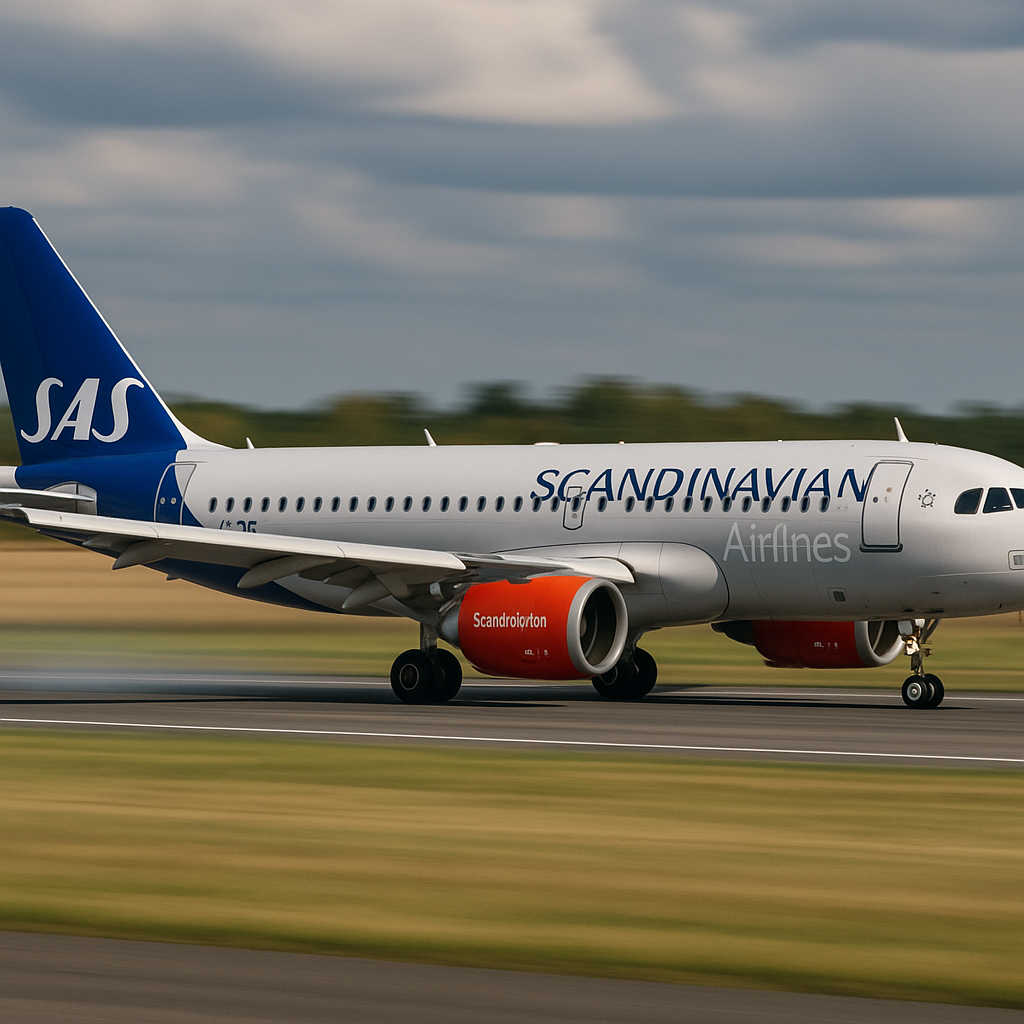
In early February 2026, a Scandinavian Airlines (SAS) aircraft attempted to take off from a taxiway at Brussels Airport, an event that left many bewildered. Authorities have now released their initial report, but it remains challenging to understand how such a major mistake happened.
SAS flight SK2590, an Airbus A320neo registered as SE-ROM, was slated to travel from Brussels to Copenhagen with 135 individuals on board. The flight, which was postponed from its intended 8:30 PM departure, began its takeoff roll around 10 PM but never actually took off.
The pilots received orders to taxi to runway 7R for a midfield takeoff from taxiway C6. However, they mistakenly turned too soon and began the takeoff on taxiways E1, F2, and V1, which are parallel to the runway. The aircraft reached a speed of 107 knots (123 mph), approaching typical takeoff velocity, on a taxiway that was considerably shorter and narrower than a runway.
Upon realizing the mistake, the pilots reduced speed about 300 meters from the end of the taxiway. The aircraft came to a halt at the taxiway’s termination, executed a sharp turn onto a different taxiway, and ended slightly off that taxiway with overheated brakes. Passengers and crew exited via stairs and were transported to the terminal by bus.
This incident was distressing for those onboard, as the aircraft halted abruptly close to the airport’s fuel tanks, averting a potentially disastrous situation. Weather conditions were not a factor, and while there is no available air traffic control audio, a VASAviation video delineates the aircraft’s movements in accordance with the preliminary report.
Such events, although infrequent, do happen. Nonetheless, this was particularly concerning as the aircraft attained a high speed and stopped only at the extreme end of the taxiway. The differences in lighting and configuration between runways and taxiways make it surprising that neither pilot detected the error earlier.
The captain of the flight, a 56-year-old with over 15,000 flight hours, was piloting, while the first officer, a 26-year-old with fewer than 1,000 hours, was monitoring. The first officer’s “100 knots” call went unnoticed by the captain, leading the first officer to command a stop upon recognizing the mistake. The thrust levers were shifted to full reverse, and braking was applied 22 seconds after the takeoff roll commenced.
The preliminary report does not provide a clear rationale for the oversight. The senior captain’s involvement in the blunder, rather than the junior first officer, contributes to the enigma. Thankfully, the aircraft stopped without incident, and no injuries were reported.
What are your thoughts on this SAS A320neo takeoff incident?