**Aegean Airlines’ Long-Distance Aspirations: A Strategic Pivot**
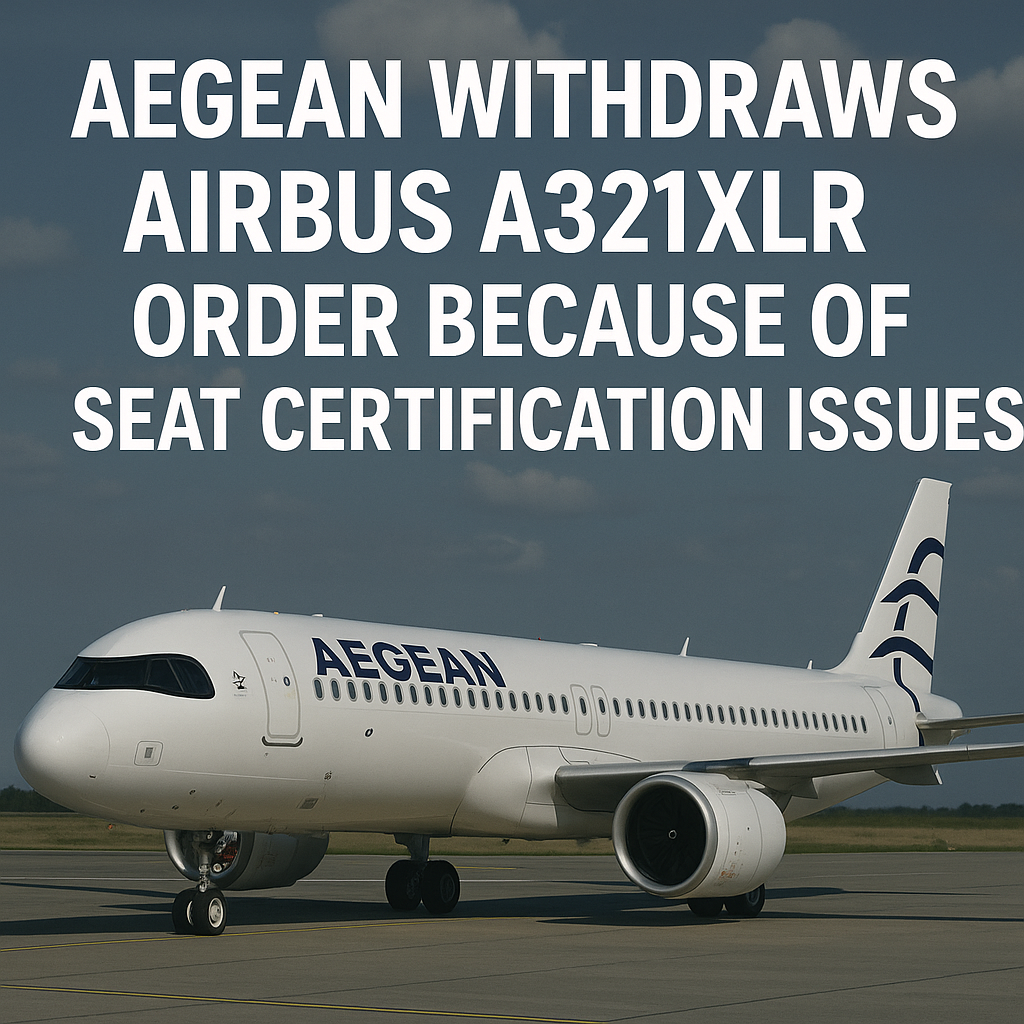
Greece’s Aegean Airlines is undergoing an exciting transition as it aims to broaden its scope into long-distance flights. Initially, the airline had grand designs to add the Airbus A321XLR to its fleet, a step that would have initiated its entry into extended routes. Nonetheless, recent updates signify a strategic pivot, with Aegean opting against the procurement of these aircraft.
**Aegean’s Original Intentions and Adjustments**
In 2024, Aegean Airlines revealed its plans to acquire four Airbus A321LRs, recognized for their long-range capabilities. The A321LR represents a long-range version of the A321 family, just behind the A321XLR, which is short for “extra long range.” Subsequently, in 2025, Aegean reached an agreement to obtain two A321XLRs that were initially reserved for JetBlue, which had postponed its request. These planes were set to showcase JetBlue’s interiors, featuring suites with direct aisle access, and were anticipated to be delivered by late 2025 and early 2026.
However, the strategy to incorporate the A321XLRs has been abandoned. Aegean has withdrawn its order due to reported challenges with seat certification. The airline concluded that if it could not receive the aircraft before the summer season, it would completely relinquish the order. As a result, Aegean will now concentrate on the four A321LRs, expected to be delivered starting in 2027.
**Prospective Long-Distance Routes and Collaborations**
Aegean’s ambitions for long-distance routes include initiating flights to India, aiming for cities such as Delhi (DEL) and Mumbai (BOM). This growth will be in partnership with IndiGo Airlines, which also operates A321XLRs in comparable markets. It remains unclear whether Aegean will expand its A321LR order or stick to a fleet of four aircraft for long-distance operations.
**Speculations and Strategic Factors**
The cancellation of the A321XLR order has led to speculation regarding the deeper reasons behind it. While seat certification problems are mentioned, there could be additional factors at play. Several elements may have influenced Aegean’s course of action:
– Concerns regarding the efficiency of managing a subfleet of just two aircraft.
– Global uncertainties and limitations in airspace may have led to a reevaluation of long-distance ambitions.
– The financial viability of operating high-premium, low-capacity A321XLRs might not align with Aegean’s strategic objectives.
Despite the cancellation, Aegean’s dedication to enhancing its long-distance capabilities is clear. The airline’s A321LRs, projected to accommodate approximately 178 seats, will be vital for this mission.
**Conclusion**
Aegean Airlines’ aspirations for long-distance expansion have hit a snag with the cancellation of the A321XLR order. While the official reason points to seat certification issues, other strategic factors might have impacted the decision. As Aegean gears up to receive its A321LRs, the aviation sector will closely observe how the airline approaches its long-distance goals. What are your opinions on Aegean’s choice to abandon its A321XLR order?