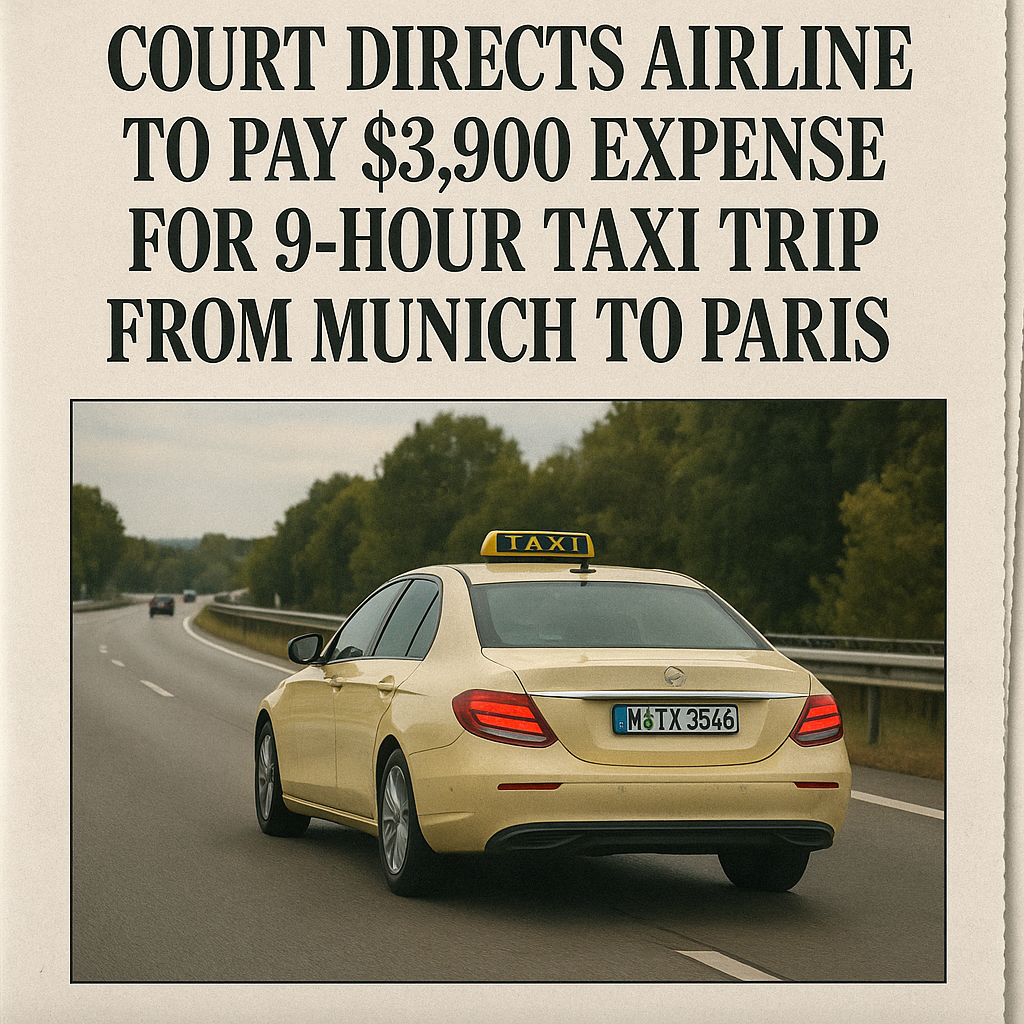
The European Union is famous for its strong consumer protections for airline passengers, largely attributed to its EC261 regulation. Nevertheless, the application of these policies frequently depends on judicial rulings, as illustrated by a recent case involving a passenger who opted for a taxi on a 425-mile trip after his flight got canceled.
A German news outlet reported an interesting court ruling regarding EC261 compensation. This incident took place in late 2024, involving a 32-year-old individual from Munich who was set to travel on KLM from Munich to Amsterdam to Paris. The passenger intended to spend a night in Paris before heading to Madrid on a separate ticket with Air Europa while taking part in the SAS EuroBonus million mile challenge.
Sadly, his travel arrangements fell apart when his flight to Amsterdam was canceled, and subsequent rebookings through Berlin and Vienna were also called off. With no flights, trains, or buses available, the traveler chose to take a taxi, costing €3,300 (approximately $3,900), to arrive in Paris on time for his next flight.
After completing his journey, he requested €250 compensation under EC261 and reimbursement for the taxi fare from the airline, which rejected both requests. He brought the airline to court, contending that he had taken the only feasible option to reach his destination punctually. While a lower court favored the airline, a higher court ruled in favor of the traveler, noting the airline’s inability to provide a suitable alternative.
This case underscores the flexible nature of EC261 regulations, where courts define what is considered reasonable alternative transportation. The ruling establishes a precedent for consumers, highlighting the necessity of timely and appropriate rebooking options by airlines. Ultimately, the airline was ordered to reimburse the traveler and pay legal costs, reinforcing the protective purpose of EC261 for passengers facing disrupted travel plans.