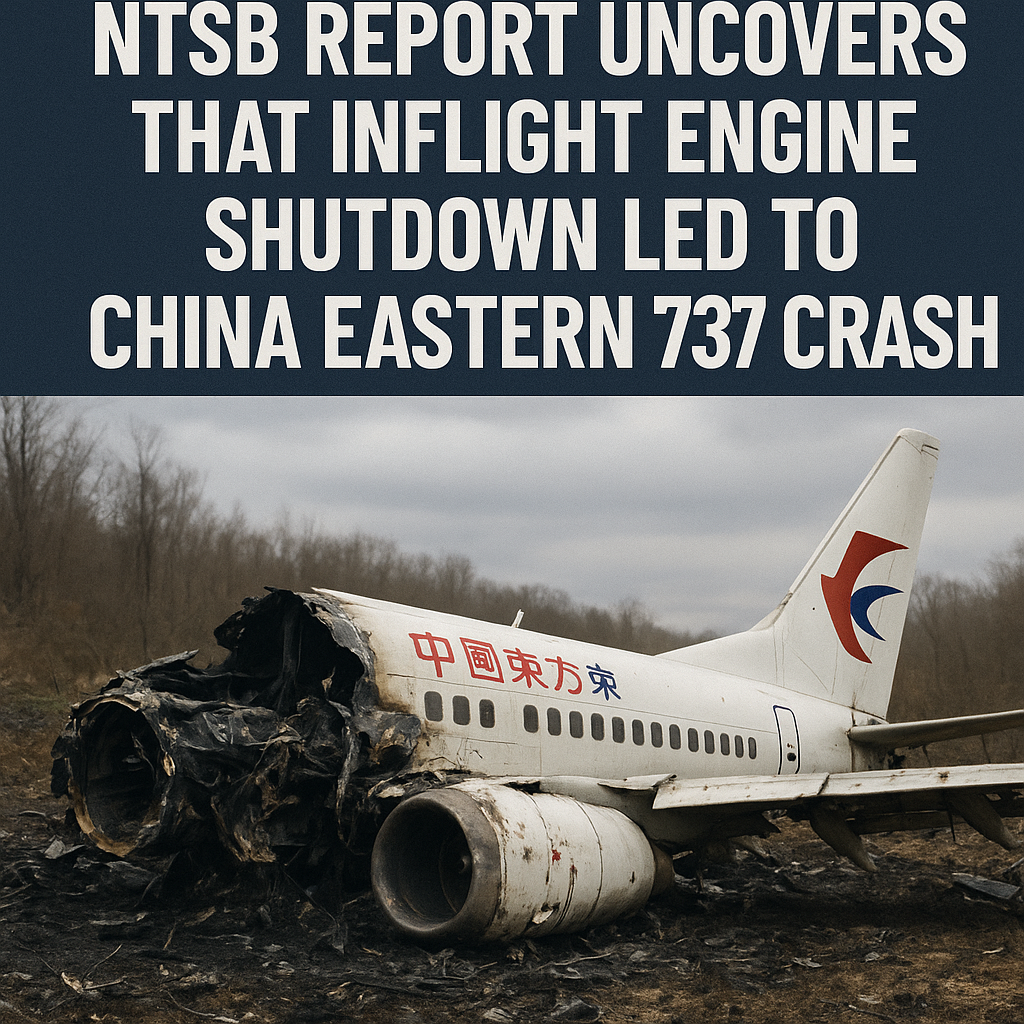
In March 2022, a China Eastern Boeing 737 met with disaster during a domestic flight in China, resulting in the heartbreaking loss of all 132 individuals onboard. The aircraft suddenly plunged, and investigators discovered no mechanical faults with the plane, sparking speculation regarding the underlying cause. The Civil Aviation Administration of China (CAAC) has faced criticism for its lack of openness, withholding a report on the tragedy due to fears surrounding national security and social order.
Recent information published by the National Transportation Safety Board (NTSB) via a Freedom of Information Act request has shed new light on the incident. The timeline of events points to a deliberate act: both engines were turned off using the fuel cutoff switches, the autopilot was disengaged, and the control column was adjusted to place the aircraft into a nosedive. These maneuvers suggest intentional tampering rather than a mechanical malfunction.
The first officer of the flight is regarded as the main suspect. He was a 59-year-old with considerable flying experience but had been demoted from captain and had encountered difficulties with simulator evaluations. The crash transpired just before the descent, a period when pilots typically take breaks, prompting inquiries about who was at the controls.
This event has drawn parallels to the 1999 crash of EgyptAir Flight 990, where akin circumstances raised suspicions of intentional misconduct by the first officer. The Chinese authorities’ unwillingness to reveal specifics has fueled further speculation and anxiety regarding the actual cause of the crash.