Kruger National Park, situated in South Africa, is famous for its remarkable biodiversity, especially its birdlife. With more than 613 identified bird species, the park serves as a paradise for birdwatchers and nature lovers. This variety stems from the park’s extensive array of habitats, ranging from savannahs to riparian forests.
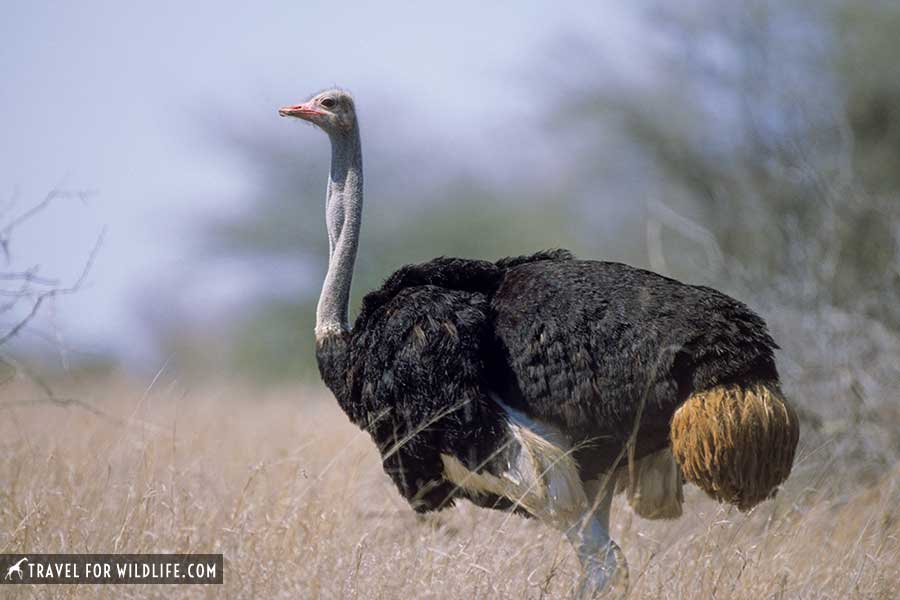
Among the park’s bird inhabitants, the ostrich is notable as the largest species, giving guests a glimpse of what ancient creatures may have appeared like. Francolins and spurfowls, often heard before spotted, contribute to the park’s soundscape with their unique calls. The Swainson’s and Natal spurfowls are frequently encountered, camouflaging themselves in the underbrush with their subtle hues.
Waterfowl thrive thanks to the park’s multitude of rivers and waterholes. The African pygmy goose, despite its misleading name, is more closely aligned with ducks and is among the smallest waterfowl species globally. The African jacana, characterized by its elongated toes, presents an interesting scene as it traverses lily pads.
Storks, herons, and egrets are commonly observed near aquatic environments. The marabou stork, recognized for its scavenging tendencies, can be identified by its prominent throat sac. At the same time, the black-headed heron is a prevalent dweller, preying on small mammals and reptiles.
The park also hosts various raptors, including the secretary bird, prized for its ability to hunt snakes. Lapwings, such as the blacksmith lapwing, are known for their loud demeanor and are often located in wetland areas.
This diversity extends to smaller bird species. Kingfishers, including the giant and woodland varieties, can be spotted along riverbanks. Bee-eaters, with their bright plumage, offer a visual treat, especially during the breeding period.
Hornbills are an additional attraction, with six species found in the park. The southern ground hornbill, an endangered species, is particularly significant. These birds are commonly seen foraging in small groups throughout the savannah.
For those keen on nocturnal species, Kruger provides chances to encounter various owls, including the elusive Pel’s fishing owl. Night drives and tranquil walks around rest camps enhance the likelihood of sightings.
Beyond these, the park is inhabited by weavers, recognized for their elaborate nests, and oxpeckers, typically observed on large mammals, feeding on ticks.
Guests at Kruger National Park are advised to carry binoculars and birding guides to fully enjoy the diverse avian ecosystem. The park’s bird hides offer excellent viewpoints for observing these avian residents in their natural habitat. Whether you’re an experienced birder or a casual watcher, Kruger’s birdlife promises an exhilarating experience.