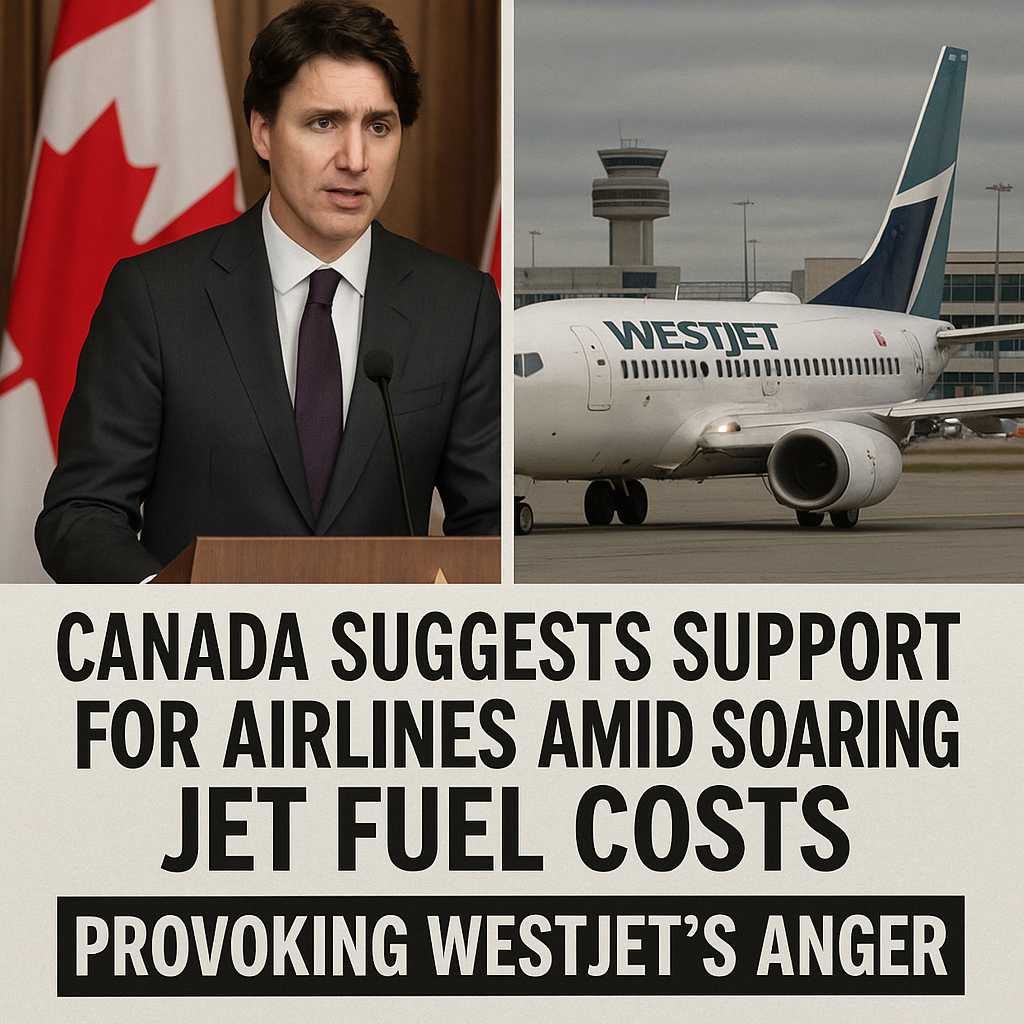
Many airlines worldwide are presently facing difficulties due to soaring jet fuel prices. Airlines operate with extremely narrow profit margins under the most favorable conditions (if they aren’t in the red initially), and nearly doubling one of their largest expenses is not something they can easily manage.
In response, the Canadian government has established a program aimed at assisting airlines, which seems somewhat equitable. Nevertheless, what strikes me most is WestJet’s position — the airline is urging the government to cease its support for airlines and not burden Canadian taxpayers. Excuse me, what?!
WestJet criticizes Canadian government airline loans
On Monday, June 8, 2026, the Canadian government unveiled what is referred to as “targeted support to help Canada’s airline sector navigate global fuel market fluctuations.” This primarily includes two measures:
– The Canadian government had previously declared that from April 20 to September 7, 2026, the federal excise tax on jet fuel has been eliminated, leading to a reduction of four cents per liter.
– Additionally, the “Liquidity for Airline Sector Resilience” program has been initiated, providing eligible Canadian airlines under financial strain from high jet fuel prices access to up to $150 million in repayable liquidity support, as necessary.
What I find particularly intriguing is how airlines are reacting to this governmental assistance. Specifically, WestJet is strongly criticizing the government’s stance, and I believe the entire statement deserves attention:
WestJet firmly opposes the government’s plan to provide loans to airlines amid escalating fuel costs. The government must decide: continue with expensive and market-distorting subsidies or create a sustainable future for Canadian aviation.
We’ve observed the consequences of this path. In just 2025, taxpayers incurred losses of approximately $400 million due to COVID-related airline loans that were forgiven by the federal government. This has effectively converted them into direct taxpayer subsidies for certain airlines.
This scenario is no different, as it’s improbable that such loans can ever be repaid by the airlines that might accept them, ultimately wasting hundreds of millions of taxpayer dollars that could have been allocated to more meaningful initiatives.
The United States, our direct competitor, has consciously opted out of bailing out airlines to maintain fair competition. Their airlines are facing the same oil prices as ours, and Canada should refrain from distorting markets, both domestically and across the border, especially during this sensitive period between our countries.
WestJet has demonstrated that an alternative route is viable for competing in the Canadian market. We do not accept government loans and instead champion a competitive environment where airlines can thrive based on their own merits.
We urge the government to break free from the cycle of corporate welfare and concentrate on long-term stability by addressing the longstanding foundational cost issues that impede our entire industry.
An airline advocating for taxpayers, and opposing corporate welfare? Wait, what? Is this WestJet’s latest April Fools’ joke? 😉
Why is WestJet advocating for taxpayers, precisely?
Admittedly, it can be challenging for governments to find the right balance when offering support to airlines in difficult times. The objective is to maintain competition without distorting the competitive environment.
This is why I was strongly opposed to the approach we saw in the United States, where the government intended to take control of Spirit Airlines, as this would severely distort competition. However, in theory, the idea of granting loans to airlines in as equitable a manner as possible does not seem wholly unreasonable.
Clearly, airlines vary in financial strength and market positions, so they won’t all share the same view on what type of support is suitable. However, WestJet’s strong condemnation of the government is quite notable.
It appears evident what’s occurring — WestJet suspects that at least one of its competitors may be on the brink of collapse and unable to cope with the challenges. Look no further than the airlines expressing gratitude for the government’s support and indicating they are considering the loan offers — Air Transat and Porter Airlines.
Currently, Air Transat has experienced a revival and reported profits in 2025, so I don’t presume that’s the main focus here. Instead, Porter remains the enigma — the airline isn’t publicly traded, making it difficult to assess the company’s financial health. Still, there’s considerable skepticism regarding the viability of the airline’s operations, especially considering its rapid growth.
I understand WestJet’s viewpoint — while WestJet itself is not publicly traded, its management has executed an impressive strategy that proves effective. Their refusal to seek any government assistance, even during challenging times, clearly illustrates that the airline can endure this crisis.