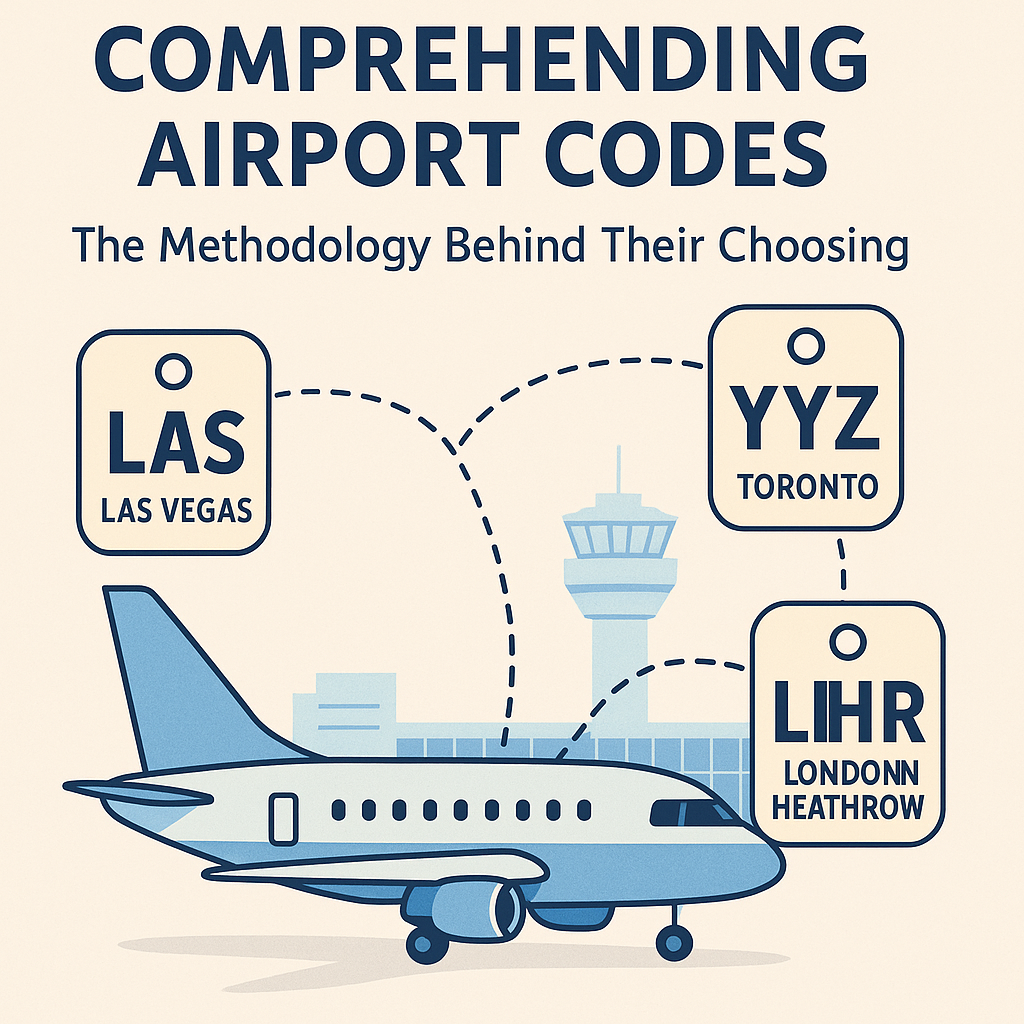
Airports typically utilize three-letter codes, often leading to confusion due to inconsistent naming conventions. If you’re curious about the origins of an airport code, I want to delve into this further, as there’s a useful website that can provide insights. I believe aviation enthusiasts, in particular, will find this interesting.
Airportcod.es reveals how airport codes are determined.
The world hosts over 11,000 airports with designated three-letter IATA codes. With more than 40,000 aviation facilities worldwide, these codes are generally reserved for airports that handle commercial traffic, otherwise, we would exhaust the available codes.
But how are these codes selected? There’s a lack of a universal system, which underscores the value of airportcod.es. Not only does it feature a grid of nearly all major airports, but you can also search for a specific airport. By clicking on the link, you’ll access an explanation of its name.
The typical methods for choosing airport codes.
As anticipated, there is no singular, standardized method for selecting airport codes. Given the limited number of available codes, not every airport can secure its preferred choice.
If I were to categorize them, I would suggest that the most straightforward and prevalent naming approach relies on the destination’s name. Examples include airport codes like Addis Ababa (ADD) and Auckland (AKL). While the letters may not always be sequential, they can be derived from various segments of the city’s name.
A variation arises when the desired code is unavailable, leading to the substitution of another letter. For instance, Dubai (DXB) likely wished to use Dublin’s (DUB) code but opted for an “X” instead of the “U.”
Another frequent naming method involves the individual or entity after which the airport is named, which may differ from its geographic location. Examples include New York John F. Kennedy (JFK) and Paris Charles de Gaulle (CDG).
Additionally, there are airport codes that create confusion, as the letters appear unrelated to the current names of the airports. For instance, Orlando (MCO) derives its code from its earlier designation, McCoy Airforce Base, while Chicago O’Hare (ORD) is based on its previous name, Orchard Field.
Lastly, some airport codes perplex many travelers, like Montreal Trudeau (YUL). Although Canadian airport codes consistently begin with “Y,” the “UL” references a nearby radio beacon. This naming rationale might not align with what one would expect for an airport!
In summary
There exists considerable inconsistency regarding airport codes. With the vast number of airports and a limited supply of codes, not all have the luxury of selecting their top choice. The predominant system tends to draw from the name of the destination served, but many also reflect the airport’s name, especially when it’s named after a person.
Moreover, various airports feature codes based on historical designations or arbitrary associations, causing confusion for many travelers. If you’re intrigued by the roots of airport codes, take a look at airportcod.es.
Did you discover any surprising airport codes?