United Airlines has been progressing in innovation, especially in elevating the passenger experience. Recently, the airline received its initial Airbus A321XLR, a new long-range, narrow-body aircraft that is becoming popular with airlines. This jet incorporates entirely new cabins, featuring a revamped business class, although it might not compete with the quality of wide-body aircraft.
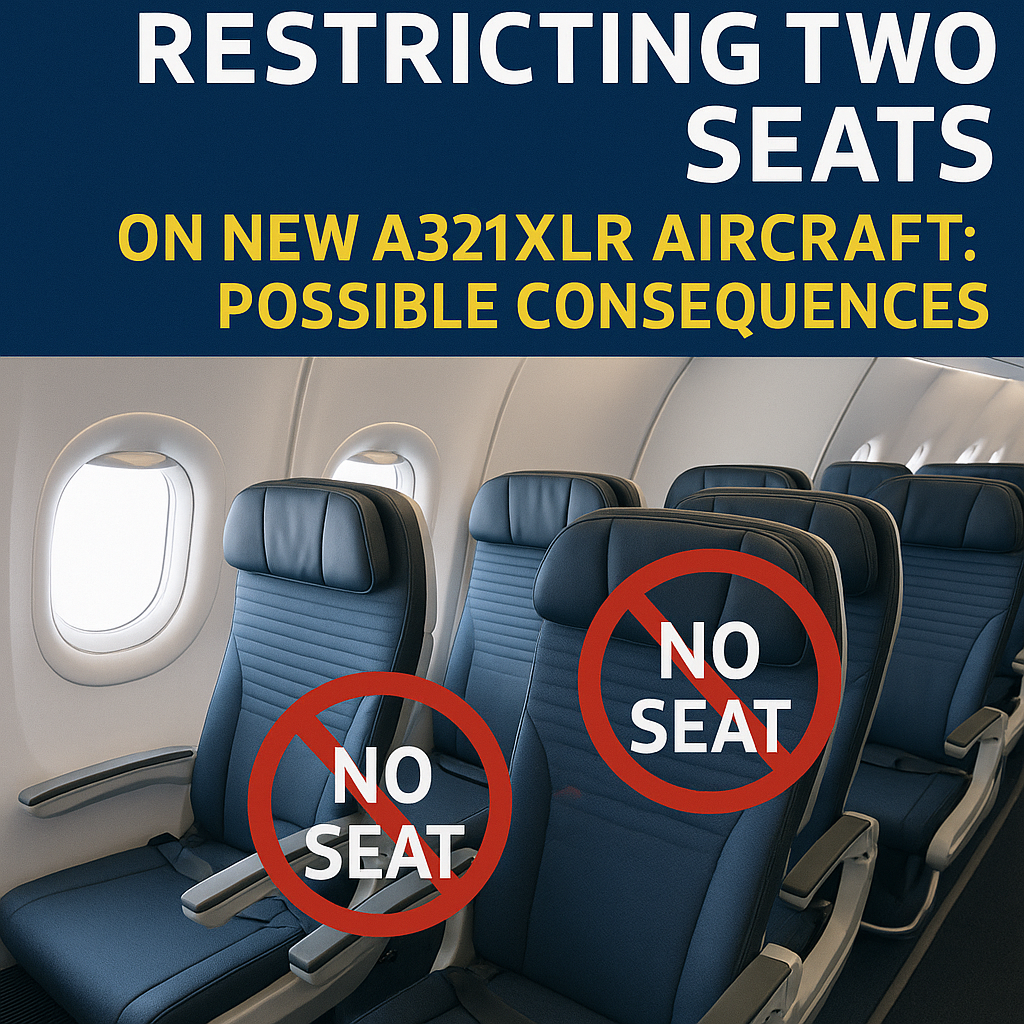
United’s A321XLRs are designed with 152 seats, inclusive of 20 in business class, 12 in premium economy, and 120 in economy. Nevertheless, the airline intends to decrease the total seat count to 150 by blocking two seats in economy, particularly in Economy Plus. This will be implemented by launching a business class style hard product for intra-Europe travel, where one row of six seats will have two center seats blocked, effectively lowering the capacity.
This strategy is partly driven by the aim to minimize flight attendant staffing. According to FAA regulations, a 150-seat aircraft necessitates three flight attendants, whereas a 152-seat aircraft requires four. By lowering the seat count, United can feasibly operate with fewer flight attendants. However, the airline indicates that it will staff five flight attendants on most A321XLR routes, though not on all, which could influence service quality on long-haul international flights.
United’s distinctive seating concept seeks to provide customers with greater choice and value, featuring all-aisle access lie-flat seats in United Polaris and Economy Plus seats that offer additional leg and elbow space. While this innovation is promoted as an enhancement to the passenger experience, it also aims to streamline staffing and operational expenses.
In summary, United’s strategy with the A321XLR represents a balance between improving passenger comfort and maintaining operational efficiency. The airline’s choice to block seats and modify staffing levels underscores the challenges and factors involved in managing narrow-body aircraft on long-haul routes.