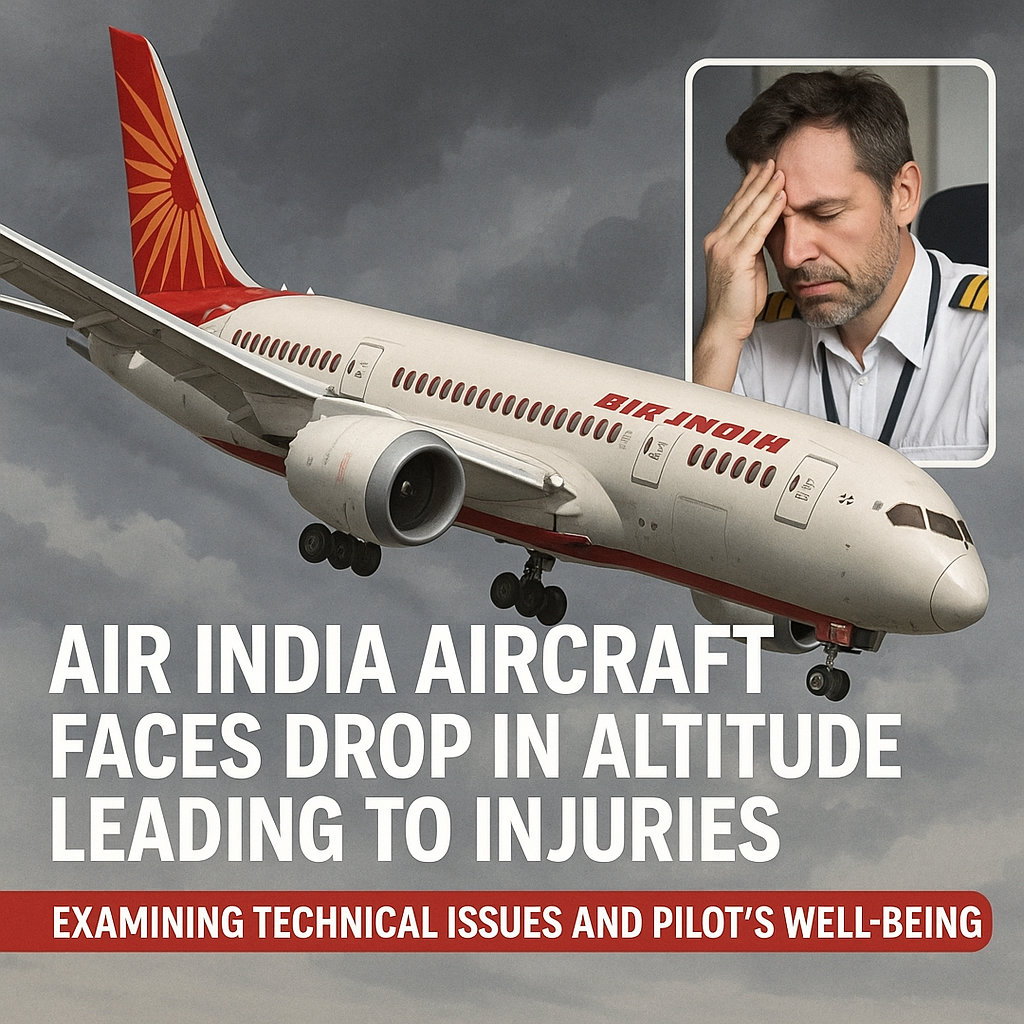
Last week, an Air India flight captured attention after it abruptly descended 300 feet while cruising, injuring more than a dozen passengers onboard. Although it’s tragic to witness injuries, one initially speculated whether the aircraft merely encountered clear air turbulence, or something else.
As more information surfaces regarding this event, the narrative grows increasingly bizarre. It’s also challenging to discern fact from (excessively sensationalized) reporting by the media in India.
**Overview of the incident involving Air India flight AI2379**
This situation dates back to Tuesday, August 4, 2026, involving Air India flight AI2379, traveling from Phuket (HKT) to Delhi (DEL). The 1,972-mile journey was aboard an Airbus A320neo with the registration number VT-EXO, carrying 145 individuals, consisting of 137 passengers and eight crew members.
While the aircraft was in transit and at cruising altitude, it experienced a sudden drop of 300 feet. Though that may seem considerable on the ground, in reality, it’s not a significant loss of altitude for a commercial flight, in the grand scheme.
However, the nature of the altitude loss is what raised concerns, particularly for those who weren’t strapped in, as the seatbelt sign was not illuminated at that moment. The aircraft also surpassed its -1g structural limit during the incident. Ultimately, 13 passengers and four crew members sustained injuries and needed to be rushed to hospitals upon landing (thankfully, all are anticipated to recover fully).
So, what triggered this abrupt altitude drop? This event has become a major topic in India, especially in light of Air India’s less than stellar reputation currently. As expected, Indian regulators have been probing this matter, with the company’s CEO compelled to respond to authorities, among other developments. With every new detail, the situation seems to grow more peculiar…
**The aircraft had mechanical malfunctions, and the captain was under the influence?!**
Preliminary investigations have disclosed that the Airbus A320neo operating this flight experienced 13 distinct technical failures in the 80 minutes preceding the sudden altitude drop. Issues ranged from alerts about doors not being secured, to warnings regarding hydraulic problems, and beyond.
In the moments leading up to the event, the captain was positioned behind the first officer in the cockpit, discussing malfunctions with the plane’s air conditioning system. A stall warning subsequently activated, and shortly thereafter, the autopilot disengaged, causing the nose to pitch upward.
Consequently, the first officer, responsible for piloting this leg of the flight, executed the standard stall recovery maneuver by lowering the nose. This action also resulted in the aircraft losing altitude.
Both pilots underwent drug tests post-flight, and the captain tested positive for marijuana (which was corroborated by a secondary test). Although marijuana can linger in one’s system for weeks, there’s no evidence suggesting the captain was under the influence during the incident; he may have used it while off duty, unrelated to this flight (this is still a breach of regulations, yet it’s a different issue).
I don’t intend to downplay the fact that the captain tested positive for marijuana. If regulations prohibit drug usage for pilots (and they do), it’s imperative to comply. However, there’s no concrete indication that the pilot was “high” during the flight, and being “high” days before a flight should not affect job performance (it’s akin to having a few drinks a week prior).
I witness many individuals criticizing the crew for not reporting the “high” captain before the flight, etc., but we have no reason to assume they were aware. Thus, it seems essential to maintain perspective here. The critical point remains that there were reportedly 13 technical faults in the lead-up to the incident, which certainly appears to be the key revelation here.
**In conclusion**
An Air India Airbus A320neo encountered a sudden altitude loss last week while traveling from Phuket to Delhi, injuring over a dozen onboard. Clearly, incidents like these require thorough investigation, and as additional details emerge, the situation becomes increasingly alarming.
The aircraft allegedly had 13 alerts and technical issues leading up to the abrupt altitude decline (which was reportedly a result of the first officer lowering the nose due to a stall warning). Additionally, it’s noteworthy that the captain failed drug tests, returning a positive result for marijuana.
What are your thoughts on this AI2379 incident?