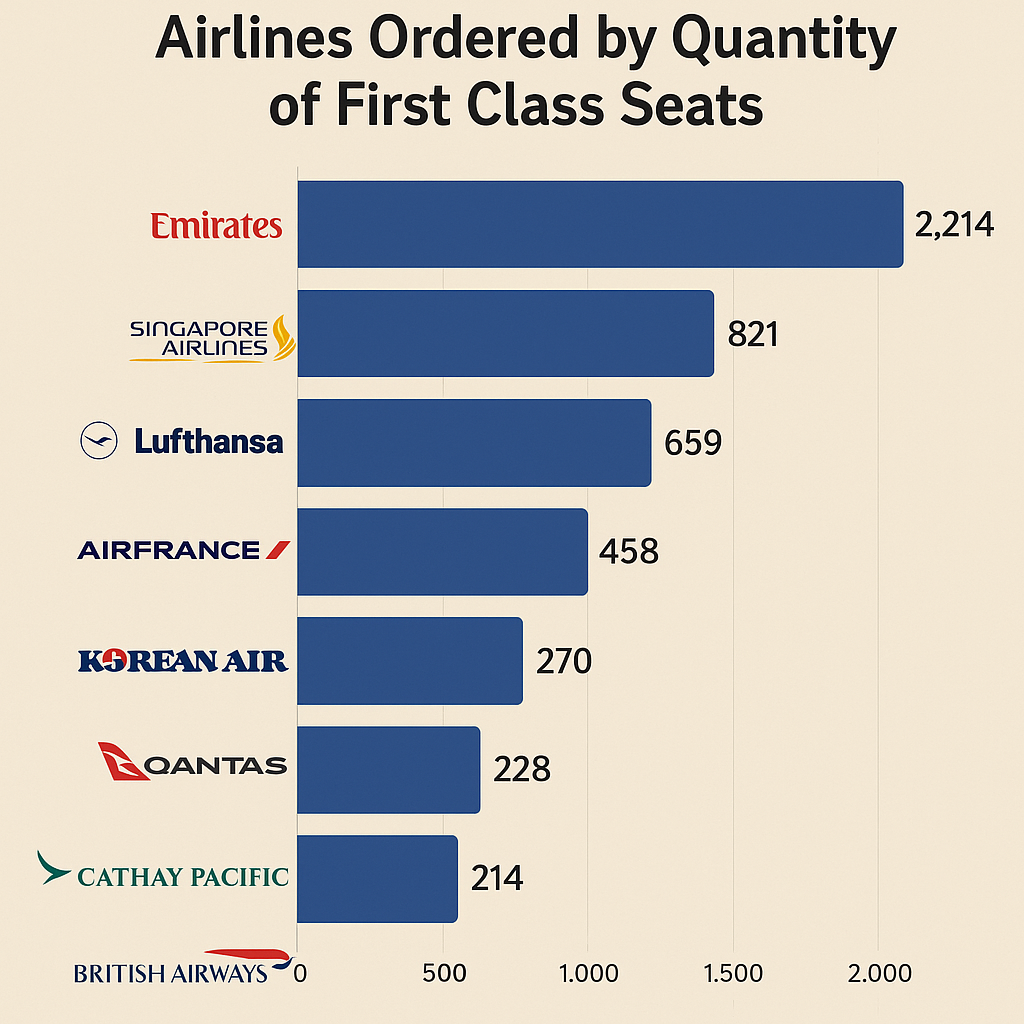
In recent times, the travel sector has experienced a marked transition towards upscale travel choices, marked by a significant rise in the interest in business class and premium economy sections. Conversely, the situation for first class is varied, with airlines adopting different strategies. Some have effectively maintained first class, while others have chosen to do away with it, prioritizing improvements to their business class services instead.
The differences in first class offerings among airlines are remarkable. A thorough examination of the first class capacity of airlines uncovers considerable discrepancies in the availability of first class seats. This article explores these variations, offering an overview of the contemporary landscape of international first class travel.
International First Class: The Peak of Commercial Aviation
International first class signifies the height of opulence in commercial flying. While some airline leaders contend that it is a diminishing service, others maintain that it continues to be a worthwhile investment. It is essential to note that this dialogue is centered around international first class, typically involving three or four cabin setups, excluding domestic first class within the U.S.
At present, 24 airlines across the globe provide international first class services. Although discussions about the world’s premier first class airlines and lounges are common, this article focuses on identifying which airlines possess the greatest first class presence, measured by the quantity of first class seats throughout their fleets.
The Figures Behind First Class Footprints
An in-depth analysis showcases the following data regarding first class seats among various airlines:
- Emirates: 201 planes, 2,214 seats
- British Airways: 76 planes, 680 seats
- Korean Air: 35 planes, 294 seats
- Lufthansa: 44 planes, 282 seats
- SWISS: 32 planes, 252 seats
- Air China: 25 planes, 220 seats
- Singapore Airlines: 34 planes, 160 seats
- Etihad Airways: 32 planes, 157 seats
- American Airlines: 19 planes, 152 seats
- Qantas: 10 planes, 140 seats
- Japan Airlines: 20 planes, 138 seats
- All Nippon Airways: 16 planes, 128 seats
- China Eastern: 20 planes, 120 seats
- Air France: 27 planes, 108 seats
- Air India: 19 planes, 100 seats
- Qatar Airways: 14 planes, 100 seats
- Saudia: 8 planes, 96 seats
- TAAG Angola Airlines: 8 planes, 94 seats
- Kuwait Airways: 10 planes, 80 seats
- Starlux Airlines: 13 planes, 52 seats
- Cathay Pacific: 7 planes, 42 seats
- Xiamen Air: 6 planes, 24 seats
- Thai Airways: 3 planes, 24 seats
- Air Côte d’Ivoire: 2 planes, 8 seats
What Should We Conclude from These Figures?
Emirates distinguishes itself with the largest first class capacity, featuring over 2,000 seats, which is more than three times that of its nearest competitor. This extensive capacity explains why Emirates’ first class ground experience might lack individualization, given the vast number of passengers. Nonetheless, Emirates upholds a high standard for its first class service.
SWISS is notable for delivering first class across all of its long-haul aircraft, ensuring uniformity in its fleet. Meanwhile, Air France is applauded for offering one of the finest quality first class experiences, accompanied by a remarkable ground service, though on a smaller scale compared to Emirates.
Final Thoughts
Despite discussions surrounding the future of international first class, the service remains robust for numerous airlines and is even seeing growth in some instances. Emirates takes the lead with the highest number of first class seats.