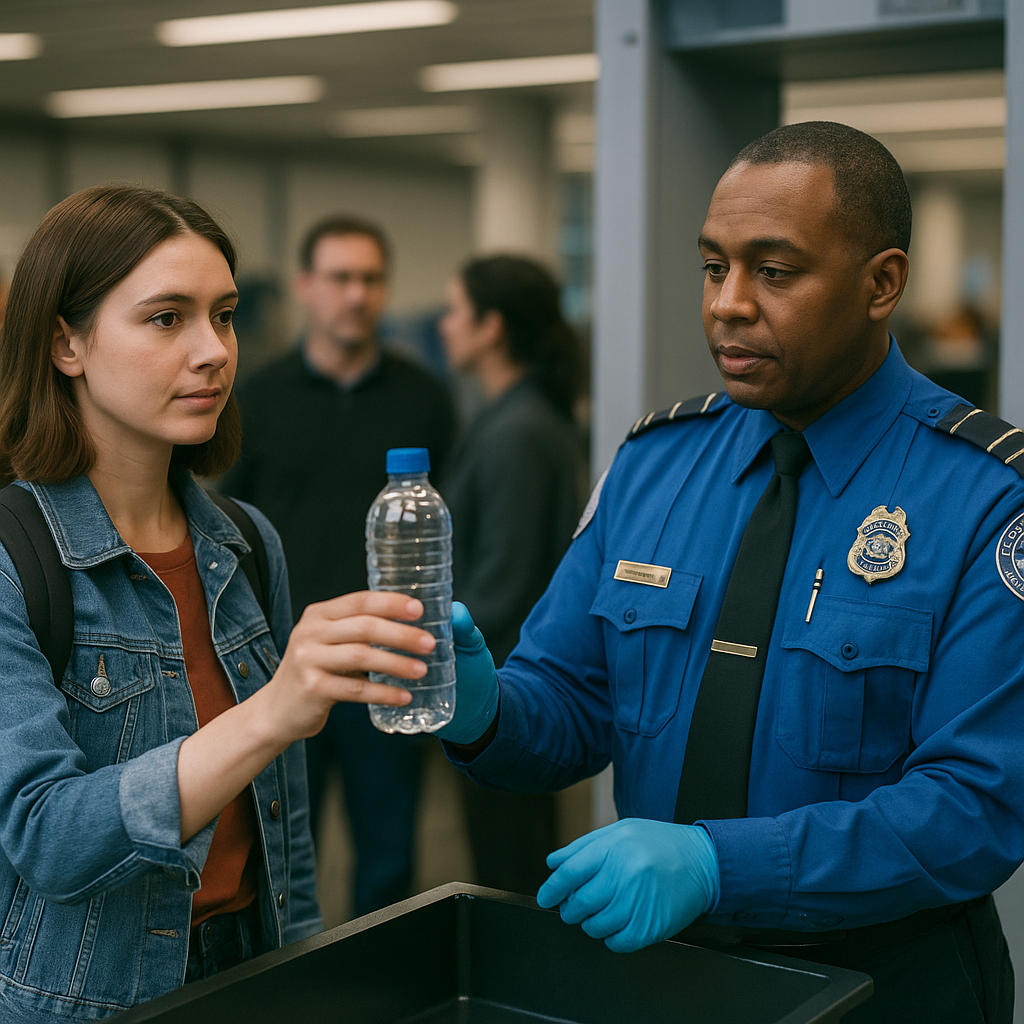
The Transportation Security Administration (TSA) is reportedly contemplating a significant modification to its policy that might permit TSA PreCheck travelers to carry water bottles through security checkpoints, potentially lifting a long-standing limitation. This alteration is anticipated to come with particular constraints and would initially be rolled out at selected airports equipped with advanced CT screening technology. This technology can automatically identify and distinguish water from other liquids, minimizing the need for manual inspections.
At present, the TSA’s “3-1-1” regulation limits travelers to bringing liquids in containers no greater than 3.4 ounces, all contained within a quart-size bag. This regulation has been enforced since 2006, following security issues, and was originally meant to be a temporary solution. However, it persists nearly twenty years later.
The suggested alteration would serve as a cautious initial move towards relaxing these regulations, mirroring similar actions in the European Union, where liquids policies have been eased based on the introduction of advanced screening technology. Despite this potential shift, the TSA has stated that a broad removal of liquids restrictions is not scheduled until around 2040, coinciding with the expected comprehensive implementation of next-generation screening technology.
This progress follows earlier modifications, such as the decision by former Homeland Security Secretary Kristi Noem to abolish the need for passengers to take off their shoes at security checkpoints. Noem had also shown interest in reevaluating liquids restrictions, implying that changes might be on the horizon.
While the potential policy modification is confined to bottled water and specific airports, it signifies a noteworthy change in the TSA’s stance on liquids restrictions. Nevertheless, it may cause confusion among travelers due to differing policies at various airports. The TSA’s consideration of this change illustrates ongoing endeavors to reconcile security protocols with traveler convenience, and it remains to be seen if and when this policy will be formally enacted.