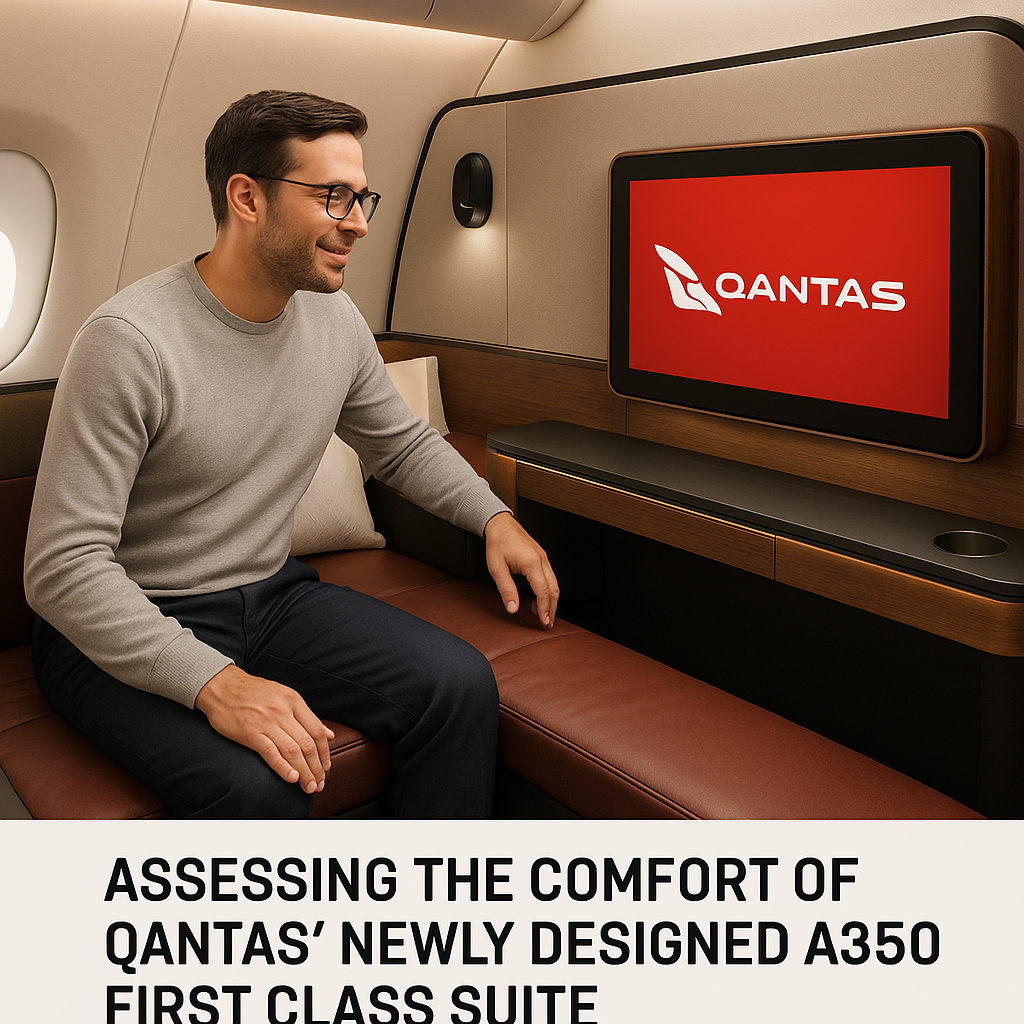
Qantas is poised to transform long-haul travel with the launch of its innovative Airbus A350-1000ULRs, which will incorporate entirely new seating configurations across different cabins. These planes are intended to handle the world’s longest journeys, linking Sydney with London and New York, while prioritizing passenger comfort. A standout feature of this rollout is the updated first-class suites, arranged in a generous 1-1-1 format with six suites spanning two rows. Each suite includes a distinct seat and bed, ensuring a lavish experience.
Nonetheless, there are doubts regarding the functionality of this layout. The suite’s seat measures 22 inches in width, and the bed extends 80 inches in length with 57-inch walls, but the width of the bed remains uncertain. Some detractors contend that the area could feel constricted, particularly with tall walls enclosing the seat and bed. This design decision has ignited discussion, given that the first-class sector is fiercely competitive, with airlines perpetually vying to surpass one another in luxury and comfort.
Comparisons have been made with other carriers such as Etihad and Singapore Airlines, which provide comparable options but have been criticized for the comfort of their beds. Japan Airlines’ A350 first class and Air France’s 777 first-class have been noted for better space efficiency, offering more expansive seating that converts into a bed.
As Qantas gears up for the 2027 launch of these aircraft, the dialogue lingers on whether the new first-class suites will fulfill expectations or if they signify a lost chance in enhancing passenger comfort on ultra-long-haul flights.