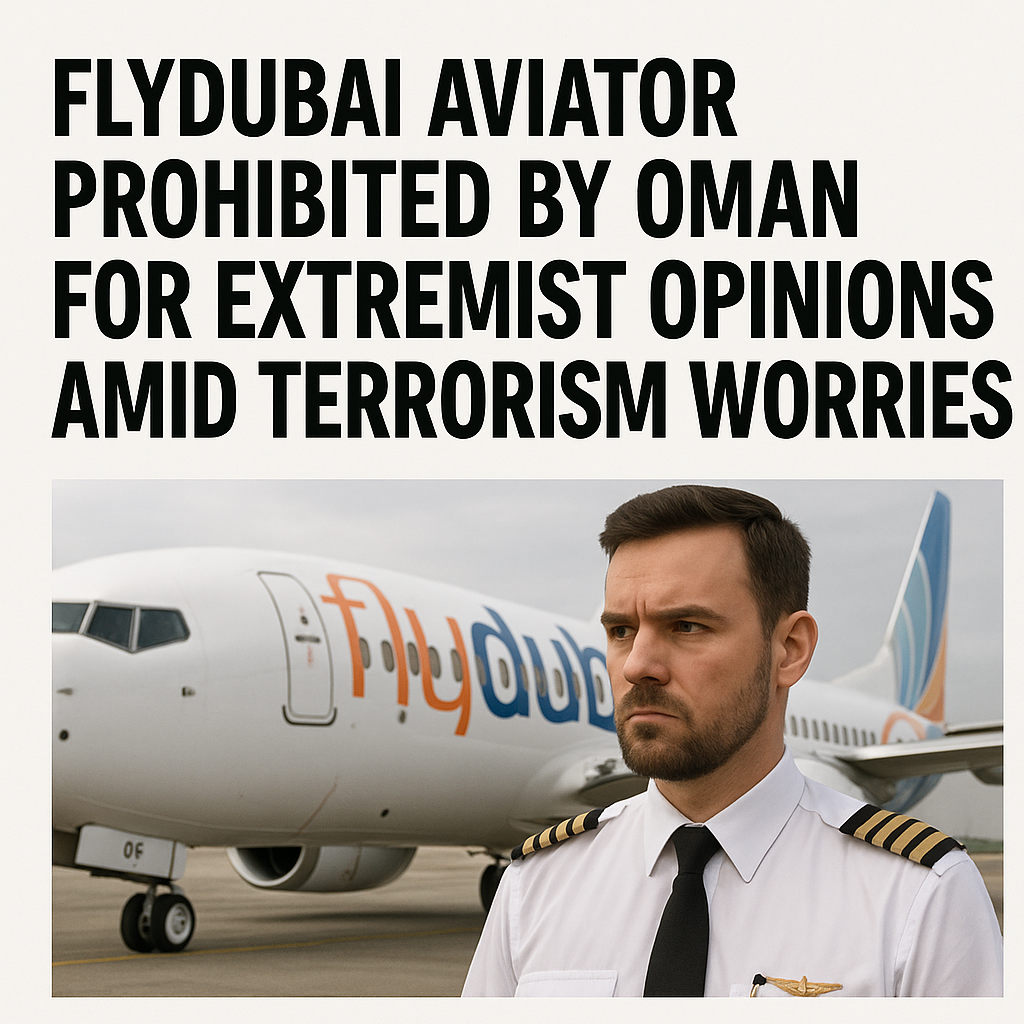
Earlier this week, a shocking event unfolded on a flydubai flight traveling from Dubai to Tel Aviv. A pilot made an attempt to crash the aircraft after attacking the captain with a knife. Fortunately, the wounded captain managed to unlock the cockpit door, enabling passengers to step in and avert the catastrophe. This occurrence is being viewed as a possible terror scheme, prompting inquiries into whether the pilot acted independently or had undergone recent radicalization.
The Wall Street Journal indicates that the first officer, a citizen of Oman, had previously been prohibited from flying in Oman due to extremist beliefs. It remains uncertain if Oman communicated these worries to other nations or airlines. The UAE is currently looking into the matter but has opted not to comment to avoid influencing the investigation. Israeli Prime Minister Benjamin Netanyahu remarked that the assailant underwent Islamic radicalization with the intention of crashing the aircraft.
This incident presents considerable challenges for Gulf airlines, which are already grappling with regional tensions. The occurrence could discourage travelers from flying through the area, affecting not only flydubai but also other airlines. Concerns about transparency in the inquiry are arising, considering the UAE’s strong interest in preserving its reputation.
The fallout from this situation could have lasting effects on flydubai, potentially influencing its image and operational activities. There are speculations regarding a potential merger with Emirates, reminiscent of how Germanwings rebranded following a comparable incident. Overall, this event underscores the necessity of comprehensive background checks and the sharing of information to mitigate such threats in the future.