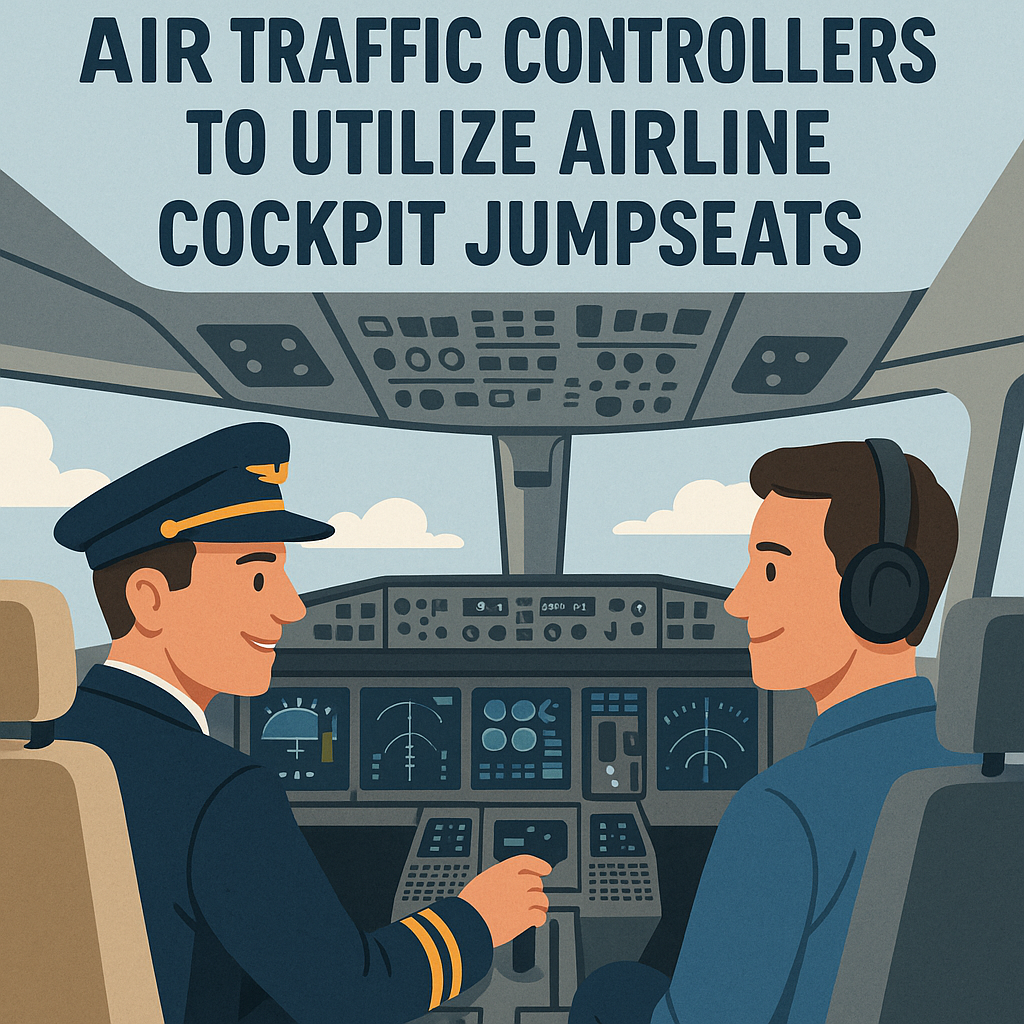
The Federal Aviation Administration (FAA) is bringing back a program that enables air traffic controllers to occupy the jumpseat on commercial flights, which was put on hold prior to the pandemic. This initiative, referred to as the Flight Deck Training program, seeks to improve the relationship between air traffic controllers and pilots by granting controllers direct experience of flight deck operations. The program aims to help controllers comprehend pilot workload, cockpit procedures, and the influence of air traffic control instructions on flight crews.
The FAA has partnered with the National Air Traffic Controllers Association (NATCA) to reinstate this program, which is anticipated to start again after Thanksgiving. All major US airlines have consented to partake, allowing controllers to occupy two flights annually. Controllers are required to apply online, stating a training objective, and must go through several vetting processes prior to boarding. Following the flight, they must submit a report outlining their learning experiences.
The program has been trialed and proven advantageous for controllers by aiding them in understanding when to refrain from issuing complex instructions and recognizing how changes, such as alterations to the landing runway, affect pilot workload. FAA Administrator Bryan Bedford underlined the significance of this program in cultivating knowledge and enhancing communication between controllers and pilots. NATCA President Nick Daniels also pointed out the unique viewpoint it provides controllers regarding the difficulties pilots encounter.
In essence, the revival of the Flight Deck Training program is viewed as a significant chance for air traffic controllers to acquire insights into the pilot’s responsibilities, ultimately reinforcing their understanding of the National Airspace System.