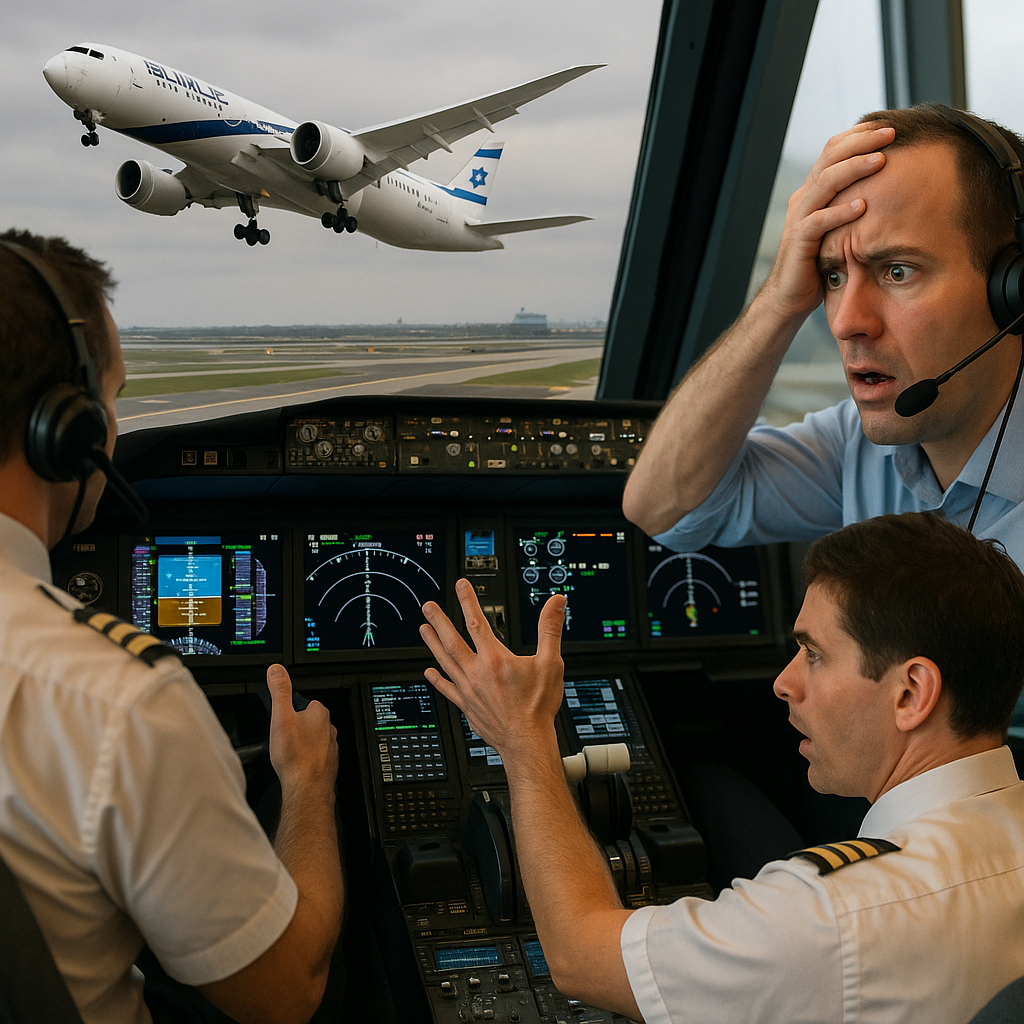
**Controllers at New York Kennedy Airport: An Examination of Communication Hurdles**
John F. Kennedy International Airport (JFK) in New York is famous for its busy airspace and the unique demeanor of its air traffic controllers (ATC). A recent occurrence involving EL AL flight LY7, a Boeing 777-200ER coming from Tel Aviv, brought to light the disorderly nature of exchanges between pilots and controllers at JFK.
**The Initial Exchange: A Prelude to Disorder**
The event commenced with what seemed like a routine interaction between the EL AL crew and the JFK tower. The pilots made contact, verifying their position on the localizer for runway 4R. The controller permitted them to land but failed to include essential information like wind conditions, providing it only when asked. This lapse, along with the controller’s curt reply to the pilot’s question, laid the groundwork for the ensuing turmoil.
**A Go-Around That Went Wrong**
The circumstances intensified when a dead animal was noted on the runway. The EL AL pilots chose to execute a go-around, a typical procedure that swiftly turned into a communication failure. The controller provided commands for a right turn and altitude ascent, but the pilots were slow to respond, resulting in a series of miscommunications. The controller’s unhelpful remark, “I don’t know, I’m not sure,” exacerbated the situation, nearly leading to a traffic clash with another departing plane.
**Insights into Communication and Standards**
This incident highlights the critical need for explicit communication and adherence to established protocols in aviation. Both the pilots and the controller showed deficiencies in carrying out their duties, emphasizing the necessity for thorough training and compliance with set procedures. The controller’s neglect in delivering timely wind information and the pilots’ failure to promptly initiate a go-around reveal larger issues within the aviation communication system.
**Conclusion: An Appeal for Professionalism and Consistency**
Although not every controller displays the casual demeanor evident in this occurrence, it serves as a warning about the potential repercussions of straying from standard practices. Securing safety in aviation demands a commitment to professionalism and the unwavering application of protocols. As this instance demonstrates, even small oversights can escalate into substantial safety risks, underscoring the need for continual training and supervision in air traffic control functions.