**My Dilemma with Choosing “Best” Travel Destinations**
Before I dive into some of my most favored locations I’ve visited, allow me to discuss why I find it challenging to make recommendations in this domain, and why I tread carefully when considering suggestions from certain individuals (just as you shouldn’t place excessive importance on my suggestions). This boils down to various factors, so I’ll outline them in no specific order.
**What Influences Our Pleasure from a Trip**
In simple terms, our enjoyment of a trip hinges on the experience we actually have, compared to the experience we anticipated. Let me illustrate with a non-travel example about ice cream:
– Suppose your friend claims that X place offers the world’s best ice cream, asserting that no other ice cream can compare.
– Then you visit that location, enjoy the ice cream, and find it quite good, but perhaps not unforgettable; you might feel a sense of disappointment, having expected a life-altering experience.
– Now contrast that with how your perception would shift if your friend hadn’t made that recommendation; you’d likely feel excited, thinking “that was so much better than I had imagined.”
The same concept applies to travel. In my opinion, the most enjoyable trips are those where we harbor few expectations, or where our actual experience surpasses our expectations. For instance, there are undeniably magnificent travel spots, but if they fail to meet the hype you anticipated, it’s normal to feel let down (the Paris syndrome comes to mind).
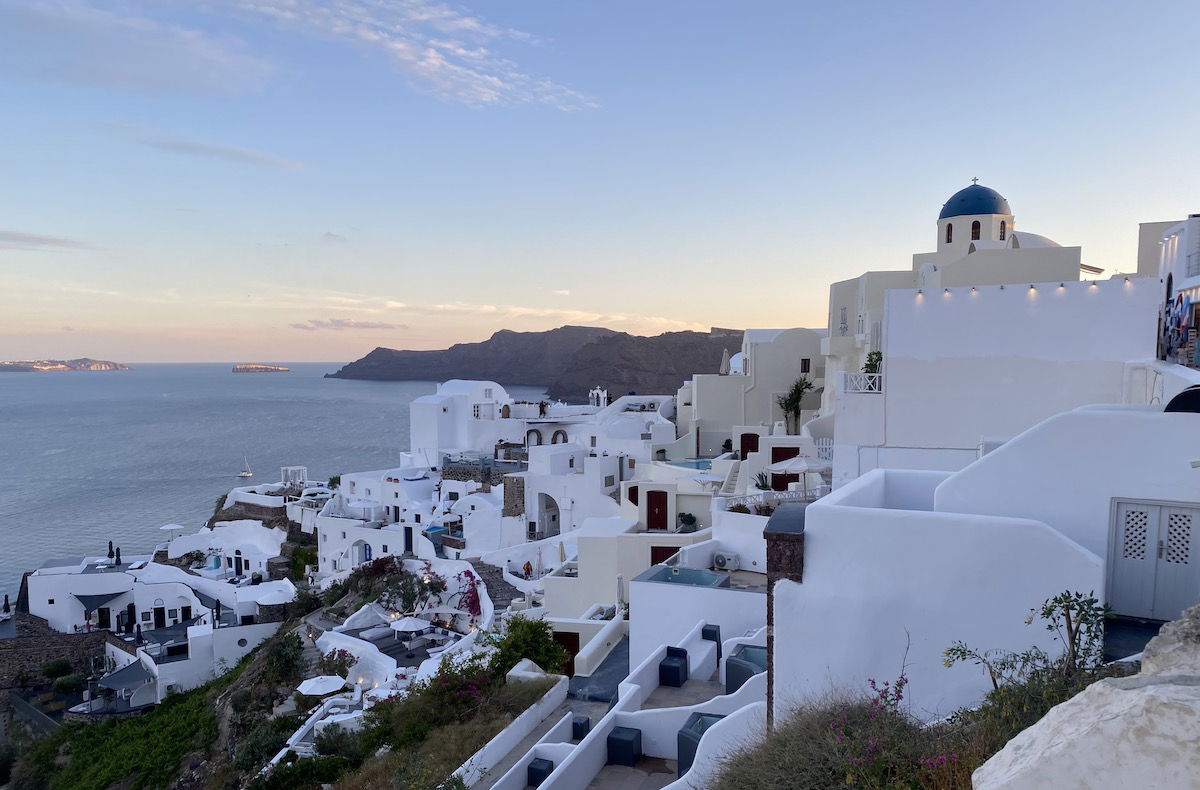
Consider Santorini; it’s stunningly picturesque, and perhaps one of the travel locations featured the most in photos. Everyone shares images that create the impression that they have the entire Oia to themselves, given the stunning backgrounds. If you visit in late July and encounter the crowd levels, the experience may seem less enchanting than you envisioned. It’s understandable to feel as though it didn’t quite meet your expectations, especially if you assumed the genuine experience would resemble the meticulously curated photos shared by others.
Conversely, if you explore a place that isn’t widely recommended, where your expectations are minimal, and you end up having an incredible experience, your expectations may be surpassed, leaving you quite pleased.
This is likely a reality we must accept in an increasingly digital world. If you traveled somewhere two decades ago, the influence of individuals online was less significant. That’s no longer the situation.
**Social Media & Recommendation Culture Transform Travel**
This connects to the previous point, but I believe it deserves further elaboration. I think social media and our prevailing “recommendation culture” have fundamentally altered travel, along with people’s ability to share objective perspectives about a destination. This comes in various forms, so let me provide a few examples.
Take the Maldives, for instance. It’s an incredibly scenic destination, but I would argue that it may be more appealing in photographs than in reality. In images, you only see the gorgeous sunshine and pristine waters. What remains unseen are the intense heat, the UV levels reaching 11 for much of the day, the numerous bugs you’ll encounter, and the jet lag and fatigue from traveling such a long distance, among other factors.
This isn’t to suggest that the Maldives isn’t worth visiting. Rather, I believe that images portray it as paradise on earth, while there are practical aspects to navigate when visiting.
We inhabit a time when social media plays a significant role in people’s lives. For many, traveling is not solely about enjoyment, but also about showcasing to friends and family that they had a great time. After all, people desire to share the highlights of their lives with those they care about. You won’t see individuals captioning photos with “I had a nice time in the Maldives, but it wasn’t precisely what I expected.”
Instead, there exists a tendency to approach trips with an expectation for them to be extraordinary — and I suppose that’s a positive mindset to adopt. However, this also contributes to a cycle of somewhat insincere feedback (or at the very least, feedback that overlooks crucial details). Your friend exclaims, “oh my gosh, your trip to Santorini looked incredible,” and you respond, “yeah, it was absolutely amazing.”
I’m not suggesting there is anything inherently wrong with this, but I also feel that collectively we might not be honest or comprehensive in sharing our impressions of destinations. For instance, you would sound like a total downer if you visited Rome and remarked, “it was great, but it was really hot, and the crowds were insane.”
**Numerous Factors Affect Our Travel Perceptions**