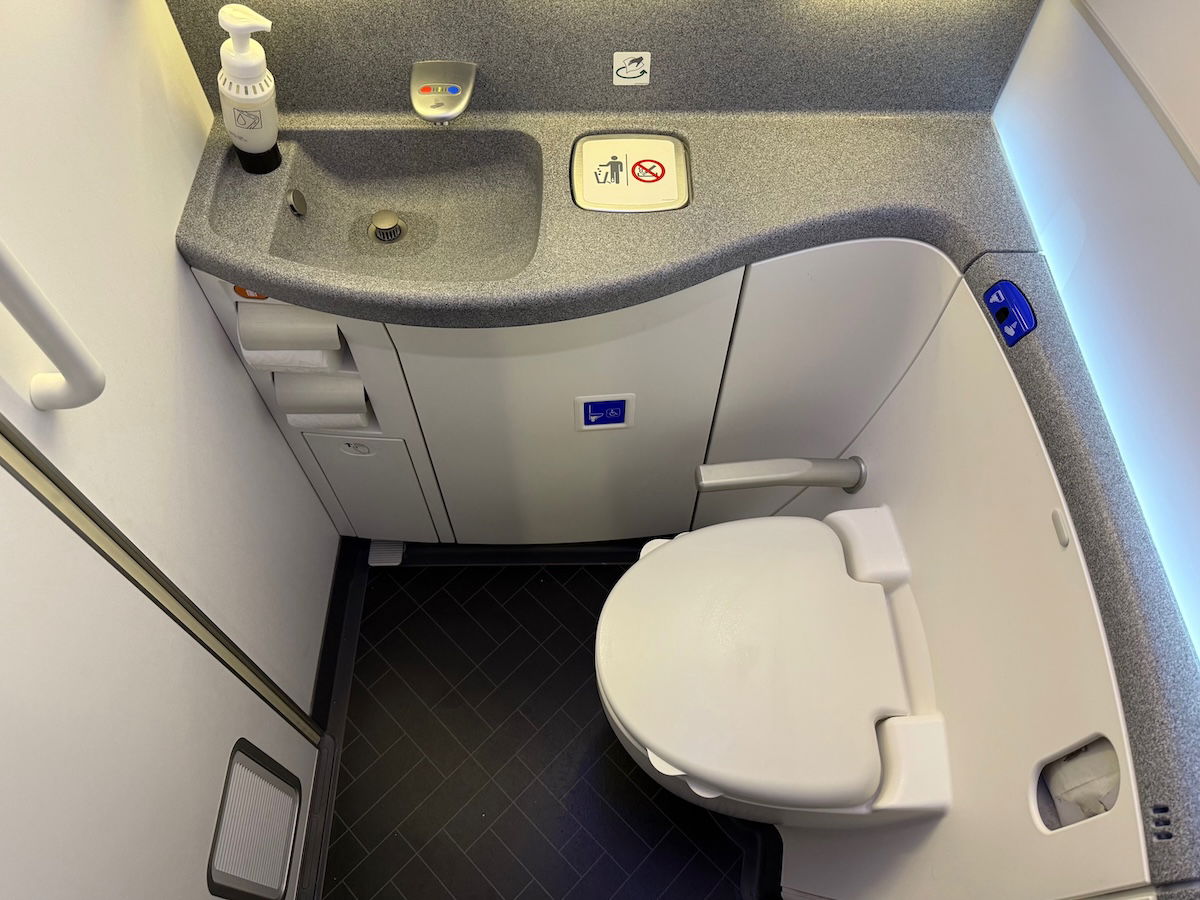
In recent times, the issue of water safety on aircraft has become a focal point, especially with regard to the sanitation of water utilized for coffee, tea, and handwashing. A recent examination by the Center for Food as Medicine and Longevity reveals considerable inconsistencies in water quality among different airlines, raising alarms about possible health hazards.
The examination, carried out over a span of three years from October 2022 to September 2025, investigated more than 35,000 water samples sourced from aircraft tanks. It attributed a “Water Safety Score” to each airline, ranging from 0.00 to 5.00, utilizing criteria such as violations per aircraft, E. coli presence, and the frequency of disinfection. A score of 3.50 or above signifies relatively safe water, earning a Grade A or B.
Per the findings, Delta Air Lines tops the list with a flawless score of 5.00, followed closely by Frontier Airlines at 4.80, both being awarded Grade A. Alaska Airlines and Allegiant Air achieved scores of 3.85 and 3.65, respectively, earning Grade B. Southwest Airlines, Hawaiian Airlines, and United Airlines were given Grade C, while Spirit Airlines, JetBlue, and American Airlines performed poorly, receiving Grade D.
The study advises against consuming onboard water that isn’t bottled, suggests abstaining from coffee or tea, and recommends using hand sanitizer instead of handwashing in the lavatory. These recommendations arise from worries regarding the purity of aircraft tank water, which is deemed non-potable.
Even with the Environmental Protection Agency’s (EPA) Aircraft Drinking Water Rule setting water quality standards on planes, the study criticizes the agency for its insufficient enforcement and rare penalties for non-adherence.
While the results may be concerning, the real-world implications for travelers are open to interpretation. The study presents best practices but recognizes that billions of passengers travel each year without significant reports of illness linked to onboard water. Ultimately, the choice to follow these recommendations rests with individual judgment.
In conclusion, the study emphasizes the significance of water safety on airplanes, highlighting substantial differences in quality among airlines. It advises caution regarding onboard drinks and handwashing, but the overall risk to passengers seems low. Hence, travelers may decide to modify their behaviors based on personal comfort levels and risk acceptance.