late 2021, Tata Group privatized Air India, returning it to its original owner from the company’s inception. Since that transition, the airline’s executives have been diligently working to revamp the airline. This is no minor undertaking, considering the current condition of Air India’s fleet (not to mention the June 2025 AI171 crash, which served as another significant blow).
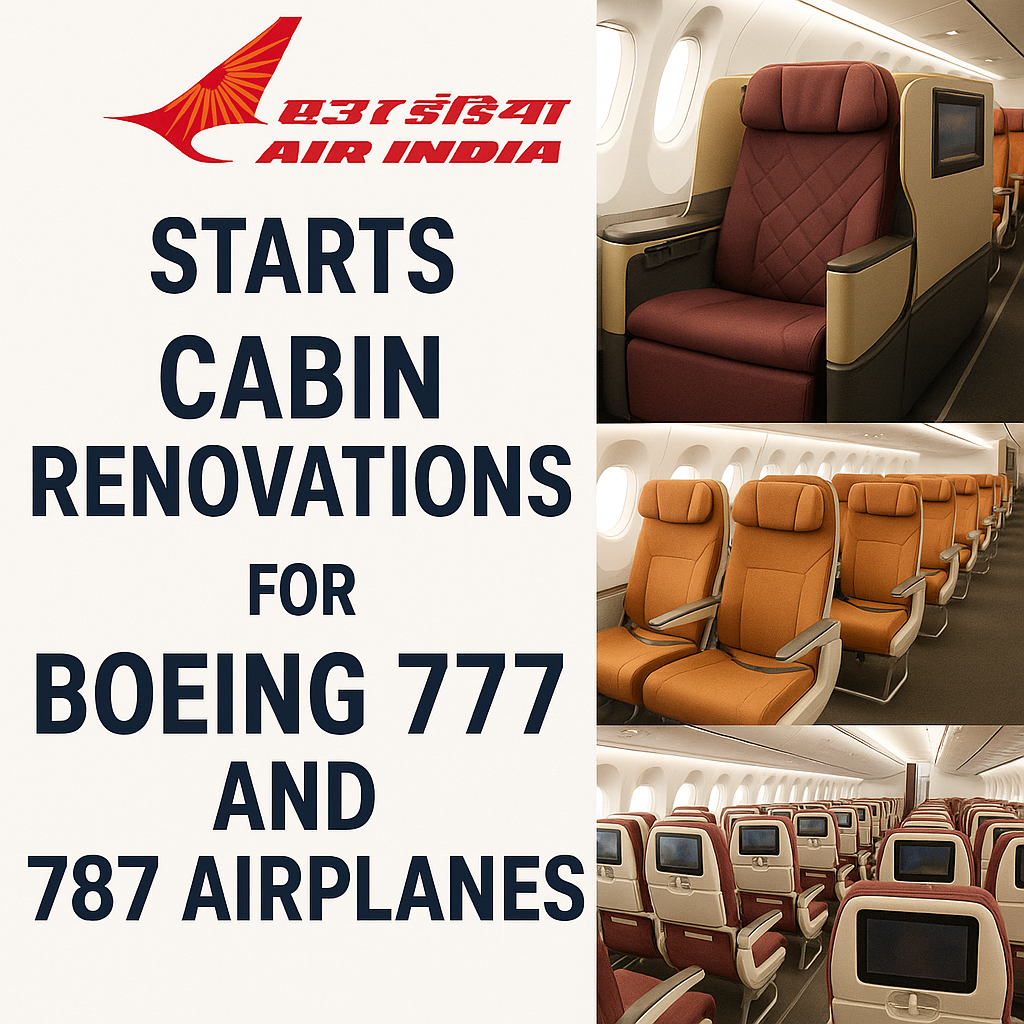
In late 2022, Air India announced plans to upgrade the interiors of its Boeing 777 and 787 aircraft, introducing completely new cabins that include upgraded premium seating. Furthermore, in early 2023, Air India made a historic order for hundreds of Airbus and Boeing aircraft, amounting to tens of billions of dollars.
Although the announcement was positively received, real advancements have been slow to materialize. Recently, Air India took delivery of its first brand-new Boeing 787-9, which also showcases a new business class offering. Excitingly, the inaugural retrofitted Boeing 787-8 with upgraded cabins is on track to enter service soon. Here’s a summary of the key points.
Air India committing over $400 million to enhance wide-body jet interiors
Tata Group plans to renovate the interiors of Air India’s existing long-haul fleet. Here’s what we can anticipate:
– Air India will be revamping the interiors of its current wide-body fleet, incorporating all Boeing 787-8s and Boeing 777-300ERs (the older Vistara Boeing 787-9s will not be receiving new interiors for the time being)
– Air India will refresh all cabins (including new seating, in-flight entertainment, and Wi-Fi), and will also launch a premium economy option throughout its long-haul fleet
– The first-class cabin will remain on the 777s, while the 787s will not include a first class (at least that is the most recent plan I’ve heard, though supply chain issues may alter that)
– The aircraft will not only receive new seating but also a change in configuration
So, when should we expect these new interiors to be introduced on the existing aircraft? Initially, the plan was for the first reconfigured aircraft to begin service by mid-2024, aiming to have all planes reconfigured within 2.5 years, which would mean by late 2026 or early 2027.
However, that timeline is no longer feasible due to supply chain difficulties, and the revised expectation is that the entire retrofitting initiative won’t wrap up until late 2028… and that’s in the best-case scenario! The updated strategy is to retrofit 787s first, followed by the 777s.
In the summer of 2025, the first of these aircraft was sent to the “shop” for reconfiguration. It’s typical for a prototype to require a significant amount of time when a new aircraft type is being modified.
On a positive note, the first 787-8 with updated interiors is expected to be in service very soon (with the registration code VT-ANT), with two additional aircraft to follow shortly (with registration codes VT-ANP and VT-ANC). All 26 legacy Air India 787-8s are scheduled for reconfiguration by July 2027.
The first retrofitted 787-8 is anticipated to operate flights from Delhi (DEL) to London (LHR) starting May 1, 2026, before expanding service to Mumbai (BOM) as of June 30, 2026, also on the London route.
The revamped planes will have 250 seats, including 20 business class seats, 25 premium economy seats, and 205 economy seats, compared to the old configuration of 259 seats with 18 business class seats and 241 economy seats.
Thus, shedding a total of nine seats while adding two business class seats and 25 premium economy seats appears beneficial for economics.
The first 777-300ER is projected for reconfiguration in early 2027, with all 13 of these aircraft expected to undergo modifications by October 2028.
In the interim, we are seeing 777-300ERs receive a light interim makeover, featuring a subtle refresh with new cabin finishes, including seat covers, carpeting, and additional enhancements.
It’s clear that all airlines are grappling with supply chain challenges, but this situation is particularly harsh. Tata Group purchased Air India in late 2021, and it will take over five years before the first 777 undergoes reconfiguration. Ouch.
Air India’s long-haul fleet is a mixed collection of aircraft
It is important to note that alongside its current legacy long-haul fleet, Air India is leasing some jets that previously operated for other airlines, primarily on a relatively short-term basis (implying these planes likely won’t remain part of Air India’s fleet in