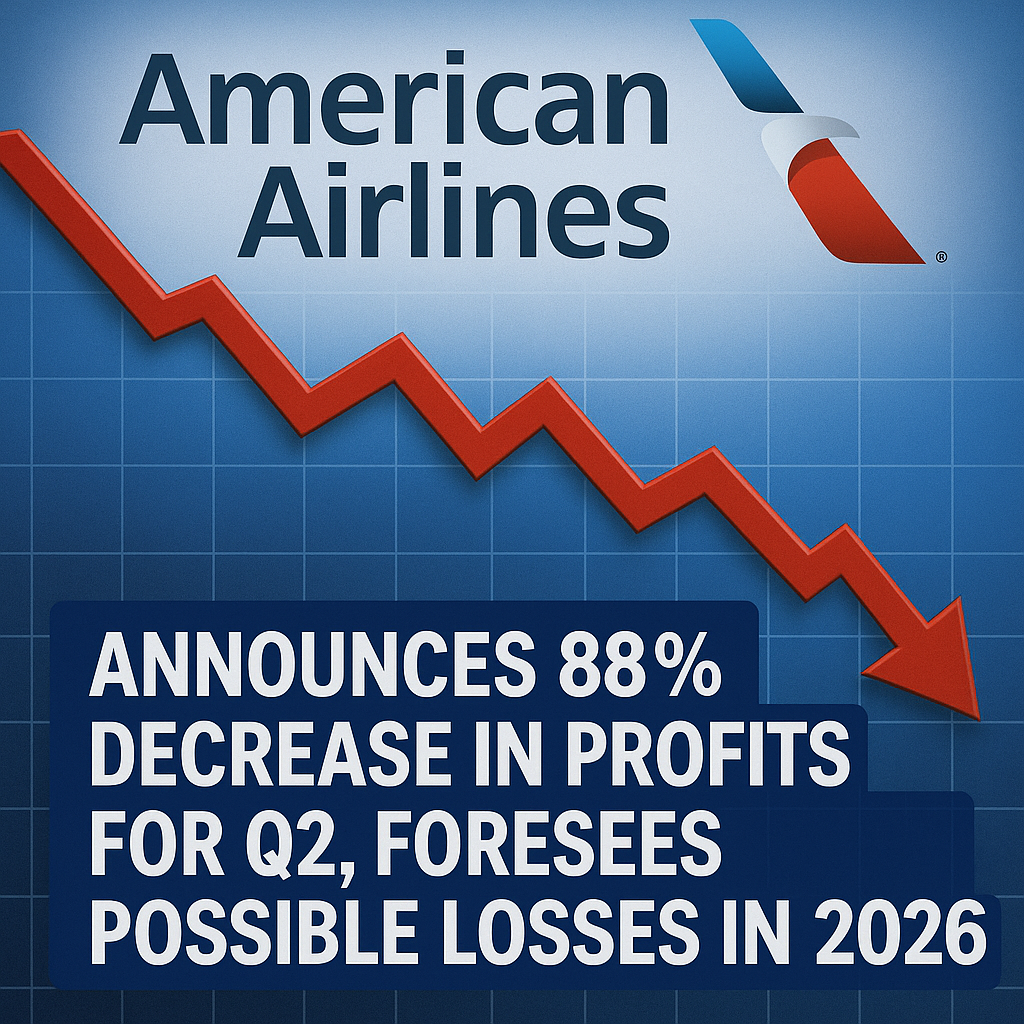
In the past few weeks, leading US airlines have disclosed their Q2 2026 earnings, showcasing a distinctive time for the sector. Despite a notable increase in jet fuel costs, airlines have been able to impose higher ticket prices, which they assert are manageable. Within the US, airlines are achieving record sales, yet year-over-year profits have seen a downturn, with varying degrees of influence.
American Airlines, one of the “big three,” is encountering the most difficulties. It recently announced a net income of $71 million for Q2 2026, signifying an 88% drop in net profit from the prior year. Conversely, Delta and United experienced profit reductions of 25% and 17%, respectively.
For Q1 2026, American reported a loss of $382 million, in contrast to a loss of $473 million during Q1 2025. Although there has been some improvement, the overall financial forecast for American in 2026 looks grim. The airline’s revised guidance now anticipates earnings per share of -$0.65 to $0.65, reflecting a downgrade from former estimates.
Delta and United have provided more consistent guidance, with Delta projecting $6.50 to $7.50 per share and United adjusting its outlook to $9 to $11 per share. American’s CEO expresses optimism, referencing the robustness of their commercial approach, yet the chances of achieving profitability in 2026 appear slim unless there are considerable shifts in oil prices or fare frameworks.
This scenario prompts inquiries into American’s future strategy and leadership, as the airline persistently falls behind its rivals. The financial hurdles underscore the necessity for strategic adaptations to enhance profitability and competitiveness within the airline sector.