**American Airlines: Reevaluating Inflight Entertainment Approach**
American Airlines, once a frontrunner among the “big three” US carriers, has found itself lagging behind Delta and United in profitability and passenger experience. Throughout the last ten years, American has adhered to a strategy of “the schedule is the product,” which has not produced the expected outcomes. Acknowledging the necessity for adjustments, American is currently striving to improve its premium offerings to compete more effectively with its competitors.
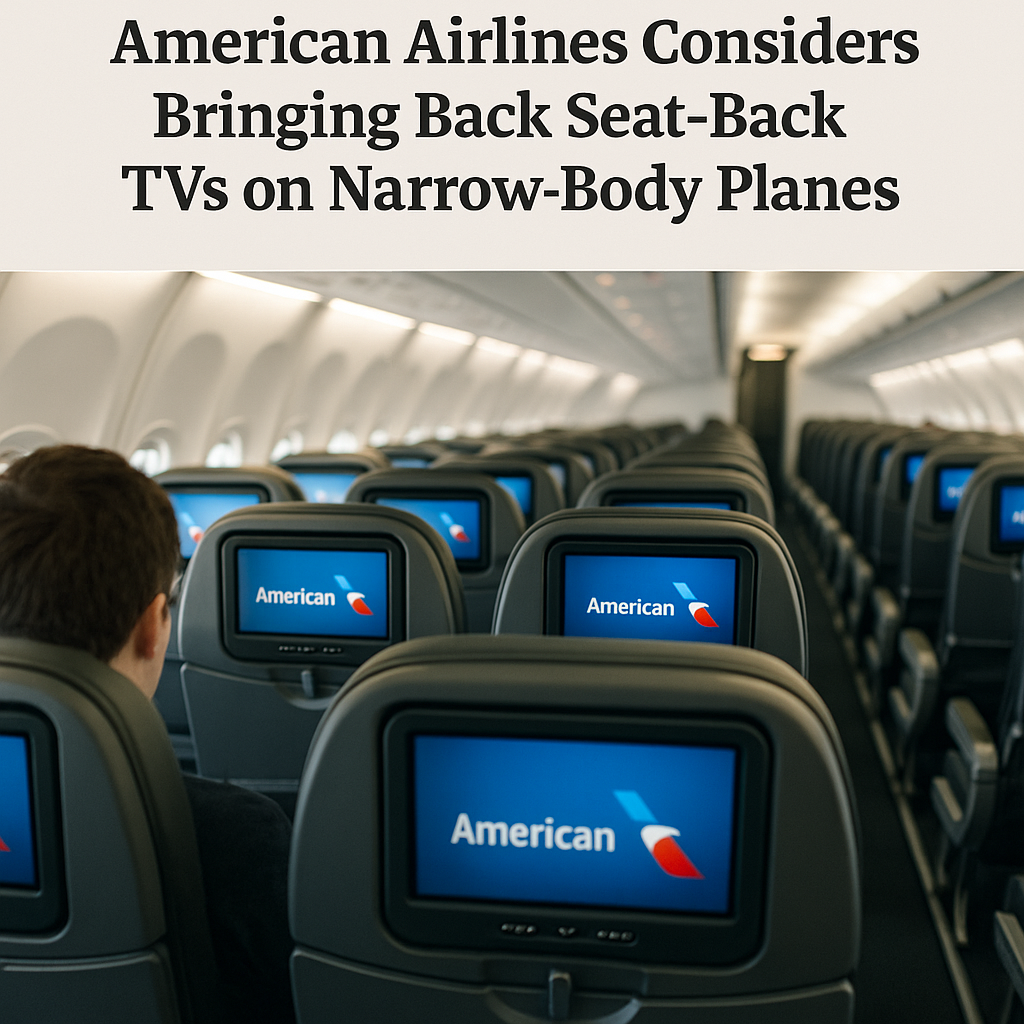
One of the most notable changes being contemplated is the reintroduction of seat back TVs on the majority of American’s narrow body mainline aircraft. As reported by CNBC, this initiative is under “serious consideration,” with a decision anticipated soon. This would reverse a former decision to eliminate these screens, a choice that sparked controversy among travelers.
The overhaul of inflight entertainment will also involve discussions with SpaceX’s Starlink and Amazon’s Leo for high-speed inflight Wi-Fi. American is reportedly negotiating with Amazon to deliver content for the seat back entertainment system, which could include Amazon Prime, music, and shopping options, potentially allowing customers to utilize AAdvantage miles for purchases.
While American has recently introduced complimentary inflight Wi-Fi in collaboration with Viasat, Delta and United have taken the forefront in inflight entertainment. United, in particular, is rolling out contemporary seat back entertainment and Starlink Wi-Fi, establishing a high standard for competitors.
The possible reintroduction of seat back TVs at American is viewed as a decision influenced by the airline’s new Chief Commercial Officer, Nat Pieper, who previously worked at Delta when they opted to add seat back screens to several aircraft models.
Despite these initiatives, some industry analysts believe that American’s obstacles extend beyond the absence of seat back TVs. Enhancing customer service, ensuring reliability, and expanding the long-haul route network are identified as more vital areas for development.
In summary, while the reinstatement of seat back TVs may not address all of American’s challenges, it reflects management’s acknowledgment of former errors and a dedication to improving the customer experience. Whether these alterations will suffice to reclaim lost ground remains uncertain.