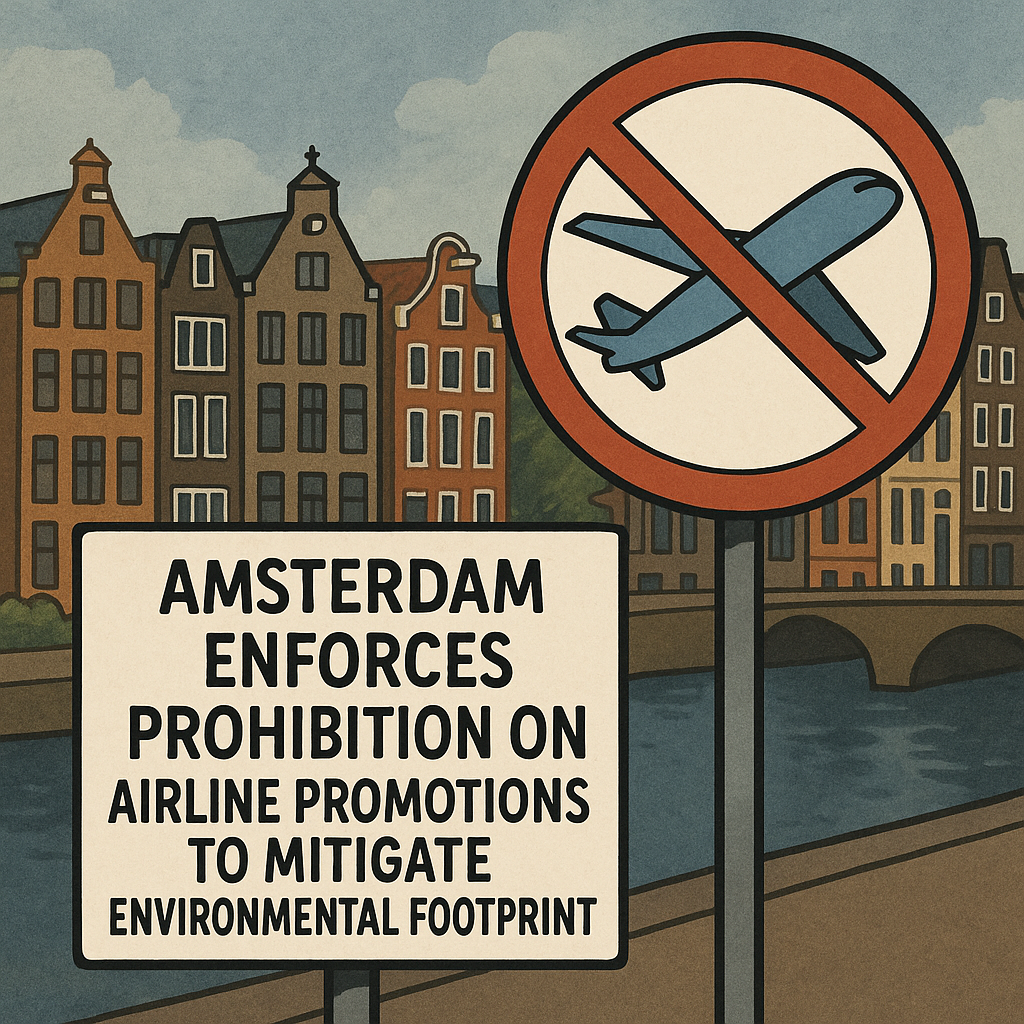
Amsterdam Implements Stringent Airline Advertising Restrictions
Starting in May 2026, the Dutch city of Amsterdam has rolled out new regulations designed to better synchronize local advertising standards with the environmental objectives set for both the city and the nation, as highlighted by Live and Let’s Fly.
Consequently, Amsterdam has prohibited all public advertising related to meat and fossil fuel products, meaning that billboards promoting such goods and services will no longer be visible throughout the city. The city aims to achieve carbon neutrality by 2050 and also plans to cut meat consumption by 50% during this timeframe.
The rationale is that public advertising should not be permitted to endorse these “vices” integral to a high-carbon lifestyle. This is akin to the numerous areas that have outlawed advertisements for items like cigarettes, or how cigarette packaging carries various warnings about the dangers of smoking.
I Understand the Rationale, but This Feels Excessive
The Netherlands has set ambitious climate targets, which is largely admirable. Nonetheless, it seems that the politicians in the nation are taking things to the extreme in their approach to air travel.
In recent years, the government has attempted to impose flight caps at Amsterdam Schiphol, which has created significant challenges for the flag carrier KLM, as it serves as the carrier’s sole hub. However, the government has had to largely retreat from these plans after intervention from European Union authorities.
I don’t claim to have a definitive solution here, and I appreciate that leaders in the Netherlands are not simply establishing climate objectives and then shrugging off failures to meet them by having taken no steps to accomplish their goals.
Still, what is the ultimate aim in this case? Does the Dutch government seek to discourage people from flying almost entirely by making it less desirable and increasing costs (through ongoing reductions in flight caps)?
On a broader scale, what will this entail for the country? Reduced air connectivity is linked to a decline in economic activity. It seems more rational to motivate airlines to utilize fuel-efficient aircraft when flying to the Netherlands and perhaps implement a carbon offset tax on fares to fund initiatives aimed at mitigating emissions.
Travel provides substantial benefits to society, and I don’t believe that making it a luxury exclusively for the wealthy is a viable solution either.
If you take a step back, it’s clear that anti-smoking initiatives have been effective in decreasing the number of smokers. But is this truly the approach we want to adopt for air travel?
In Conclusion
Amsterdam has enacted new advertising regulations in the city, prohibiting all public ads for meat and fossil fuel products, which includes limitations on airline marketing.
I understand that the Netherlands has environmental objectives and intends to take real measures to realize them. However, I worry that diminished air connectivity and a decreased interest in traveling to far-flung locations will come with substantial societal costs.
What are your thoughts on Amsterdam’s new advertising restrictions?