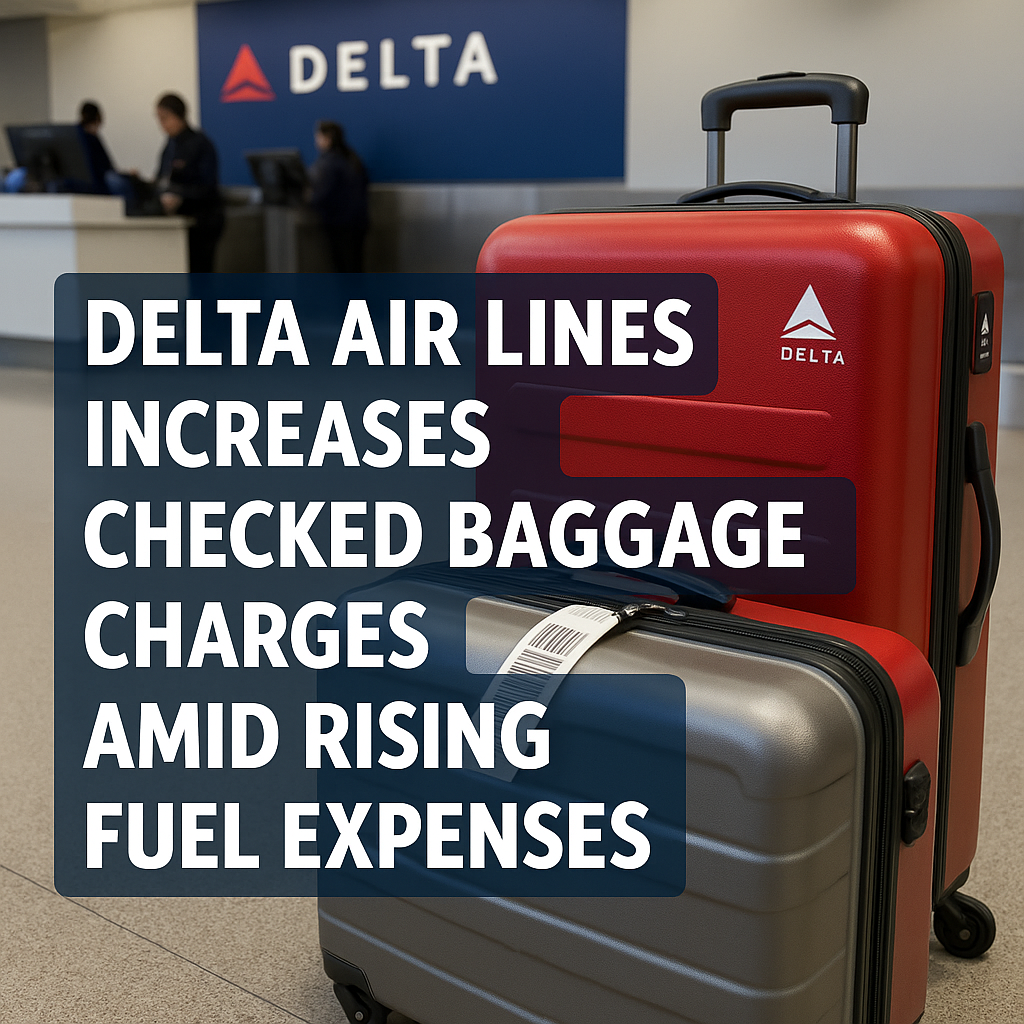
Last week, JetBlue became the first U.S. airline to raise checked bag fees recently. This is an area where JetBlue often “pioneers,” prompting other airlines to follow suit. Soon after, United matched the change, and we now have a third airline joining this trend.
Delta seeks to enhance revenue through higher checked bag fees
Airlines are undeniably facing a challenging situation at the moment. We’ve witnessed a significant rise in fuel costs, which constitutes one of the largest variable expenses for airlines. If oil prices do not decline from their current levels, even the most profitable airlines in the world will experience losses, while those that were already struggling may face bankruptcy.
For tickets bought starting tomorrow (Wednesday, April 8, 2026), Delta will raise checked bag fees by $10-50. Currently, the fee is $35 for the first checked bag, $45 for the second, and $150 for the third. With this adjustment, the fees will be $45 for the first checked bag, $55 for the second, and $200 for the third.
In a statement, Delta notes that “these changes are part of Delta’s ongoing evaluation of pricing across its operations and reflect the effects of changing global circumstances and industry trends.”
Delta is raising checked bag fees by $10-50
Why Delta is opting for increased checked bag fees rather than raising airfare
In recent weeks, numerous airline executives have indicated that airfare might rise due to climbing oil prices. The challenge is that demand for airfare is quite elastic — as airfare increases, demand decreases.
Moreover, Americans are feeling the effects of higher oil prices, resulting in less disposable income for many (even though the “premium” airlines love to highlight the benefits of the K-shaped economy). If airlines could easily raise prices, we wouldn’t find ourselves in a scenario where the majority of U.S. carriers are incurring operational losses.
From the airlines’ perspective, if they urgently need to generate additional revenue from passengers, adjusting checked bag fees makes logical sense, since passengers usually don’t scrutinize these details as closely as they do direct ticket prices.
So while the price of oil influences checked bag fees, it’s primarily because adjusting these fees presents a more feasible option for increasing revenue compared to simply raising fares.
It’s simpler to elevate checked bag fees than fares
Bottom line
Delta is increasing checked bag fees by $10-50 per flight. The rise is $10 for the first and second checked bags, and $50 for the third bag and any additional bags.
Airlines consider increasing checked bag fees as the most straightforward method to enhance revenue without raising fares. JetBlue initiated this wave of bag fee hikes, and now United and Delta have swiftly followed, with other airlines expected to follow shortly. And keep in mind, once costs increase, they seldom decrease.
What are your thoughts on Delta’s decision to raise checked bag fees?