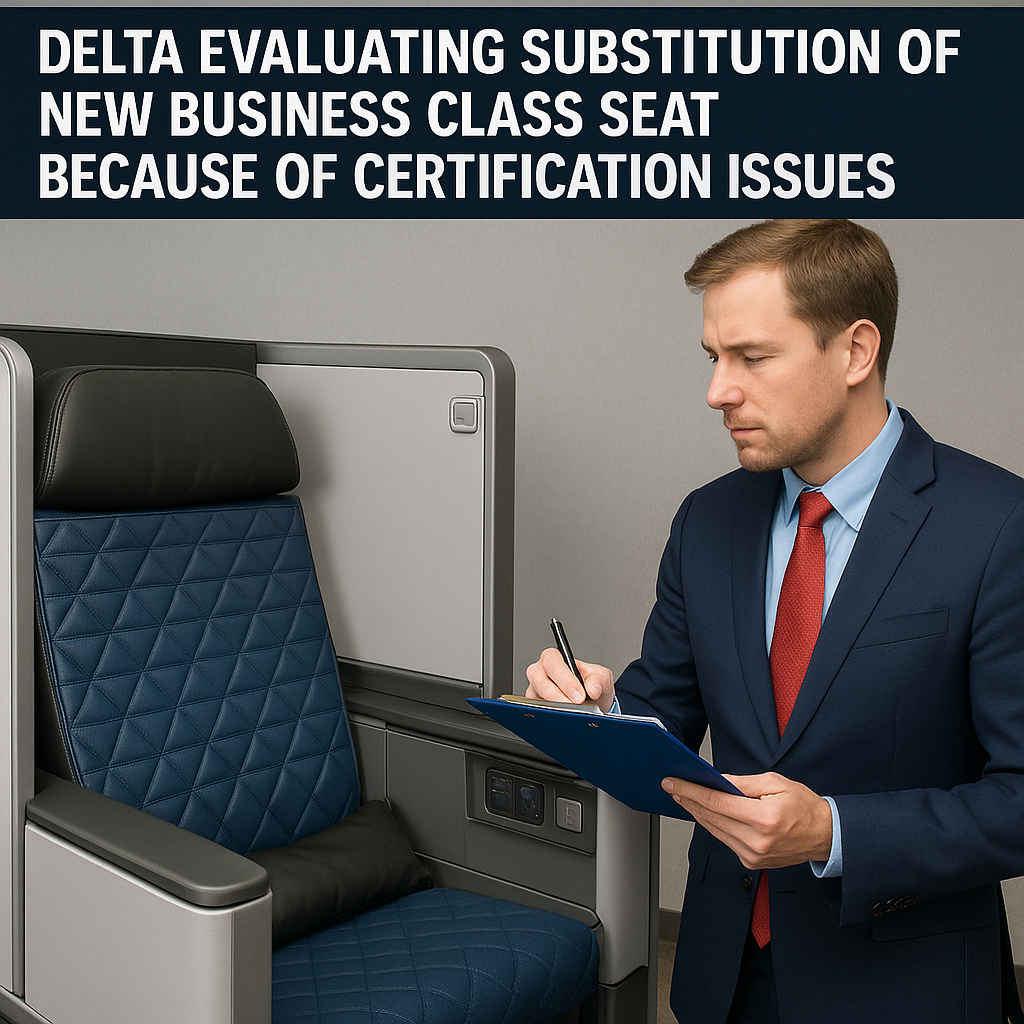
Certification of aircraft seats has emerged as a major hurdle in the aviation sector, especially as airlines aim to improve passenger comfort through innovative seating solutions. Delta Air Lines is currently grappling with such issues within its Airbus A321neo fleet. The airline had high hopes of launching a subfleet of A321neos with premium layouts, featuring flat bed business class seats for transcontinental travel. Nevertheless, the certification process for these new seats has encountered difficulties.
Delta initially envisioned the installation of reverse herringbone seats, which are typically regarded as superior to conventional herringbone seats. Even though the airline is set to receive the first aircraft equipped with the new interiors in 2024, it has been unable to utilize them due to certification setbacks. As a result, the aircraft has been momentarily adapted with 44 domestic first class seats and is currently operating on domestic routes.
Recent speculation indicates that Delta may forgo its original seat selection, the Safran Vue, in favor of the Thompson Aero VantageSOLO seat. This particular model is already employed by carriers such as JetBlue and Iberia on comparable planes. If confirmed, this alteration would represent a notable shift in Delta’s approach, potentially bringing its business class offerings in line with those of its rivals.
The certification delay has been linked to the stringent requirements established by the Federal Aviation Administration (FAA), especially regarding crash testing and human factors. This scenario underlines the disconnect between seat manufacturers and regulatory agencies, as even seasoned companies like Safran encounter challenges in fulfilling these demands.
Ultimately, if Delta moves forward with the speculated seat transition, it could be viewed as a setback, considering the time and investment already committed. Nonetheless, it illustrates the intricacies and obstacles associated with aircraft seat certification in today’s aviation environment.