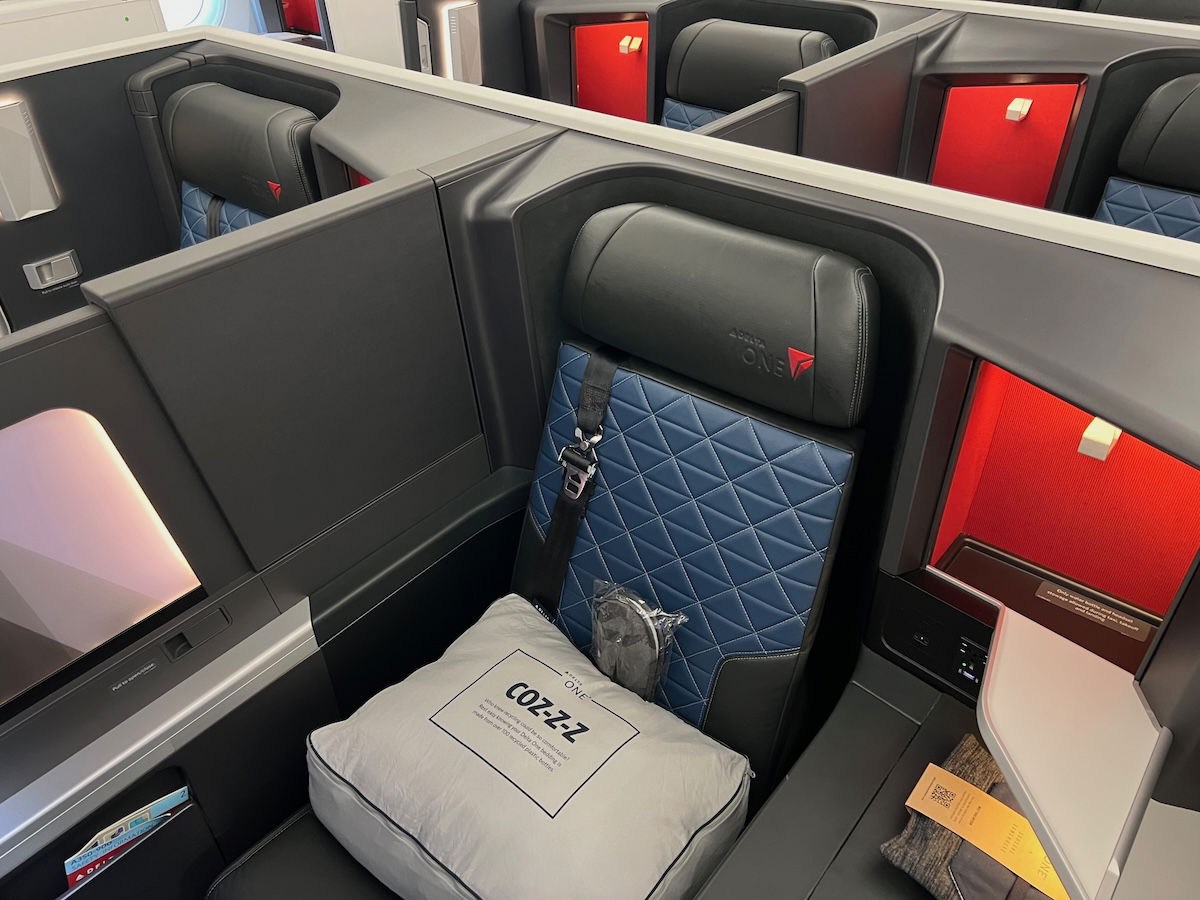
**Delta’s Basic Business Class: A New Chapter in Air Travel**
In the past few years, the airline sector has undergone a notable transformation in pricing models, marked by the emergence of “basic economy” fares. These fares, providing limited benefits, are intended to capture a wider audience while enticing current customers to opt for higher fare tiers to bypass limitations. This approach has shown success, leading airlines to investigate analogous frameworks in other cabin categories.
**Delta’s Ambition for Basic Business Class**
Delta Air Lines, a key player in the U.S. air travel industry, has been clear about its plans to launch a “basic” level in its premium classes. Although an official announcement is awaited, Delta leaders have indicated a full rollout by 2026. This initiative aligns with Delta’s broader objective to grant passengers increased options and flexibility while maximizing earnings through fare differentiation.
**What to Anticipate from Basic Business Class**
The idea of a “basic” business class isn’t completely unprecedented. Globally, airlines such as Emirates, Finnair, and Qatar Airways have previously unbundled their business class services. Delta’s strategy is likely to follow suit, where the lowest-tier business class fare would encompass a seat and basic amenities. Travelers would then have the option to pay for extra services like seat selections, lounge entry, and ticket flexibility.
In a recent earnings call, Delta President Glen Hauenstein elaborated on the airline’s plans, highlighting the establishment of three tiers for each product: basic, main, and extra. This tiered model is designed to provide customers with various options, allowing them to customize their travel experiences based on their needs and financial considerations.
**Possible Outcomes and Market Effects**
The rollout of basic business class fares could bring about multiple changes in the travel experience:
– **Seat Selections:** Travelers might encounter fees or limitations on the ability to choose seats in advance.
– **Ticket Flexibility:** Basic fares could involve charges for changes or cancellations.
– **Lounge Entry:** Access to Delta’s Sky Club or Delta One Lounge may be restricted or necessitate extra payment.
– **Priority Services:** Priority check-in, security, and boarding could be curtailed or unavailable.
Delta’s decision to unbundle its premium offerings is likely to inspire other major U.S. airlines, such as American Airlines and United Airlines, to implement similar tactics. This transition mirrors a larger trend within the industry, where airlines aim to maximize revenue by providing a la carte options.
**Final Thoughts**
As Delta prepares to unveil its basic business class by 2026, travelers can look forward to a more segmented and customizable flying experience. While this method promises potential savings for cost-conscious flyers, it also creates a chance for airlines to reintroduce fees and limitations on premium rates. As the industry progresses, passengers will need to adapt to these alterations in order to make well-informed choices regarding their flight alternatives.