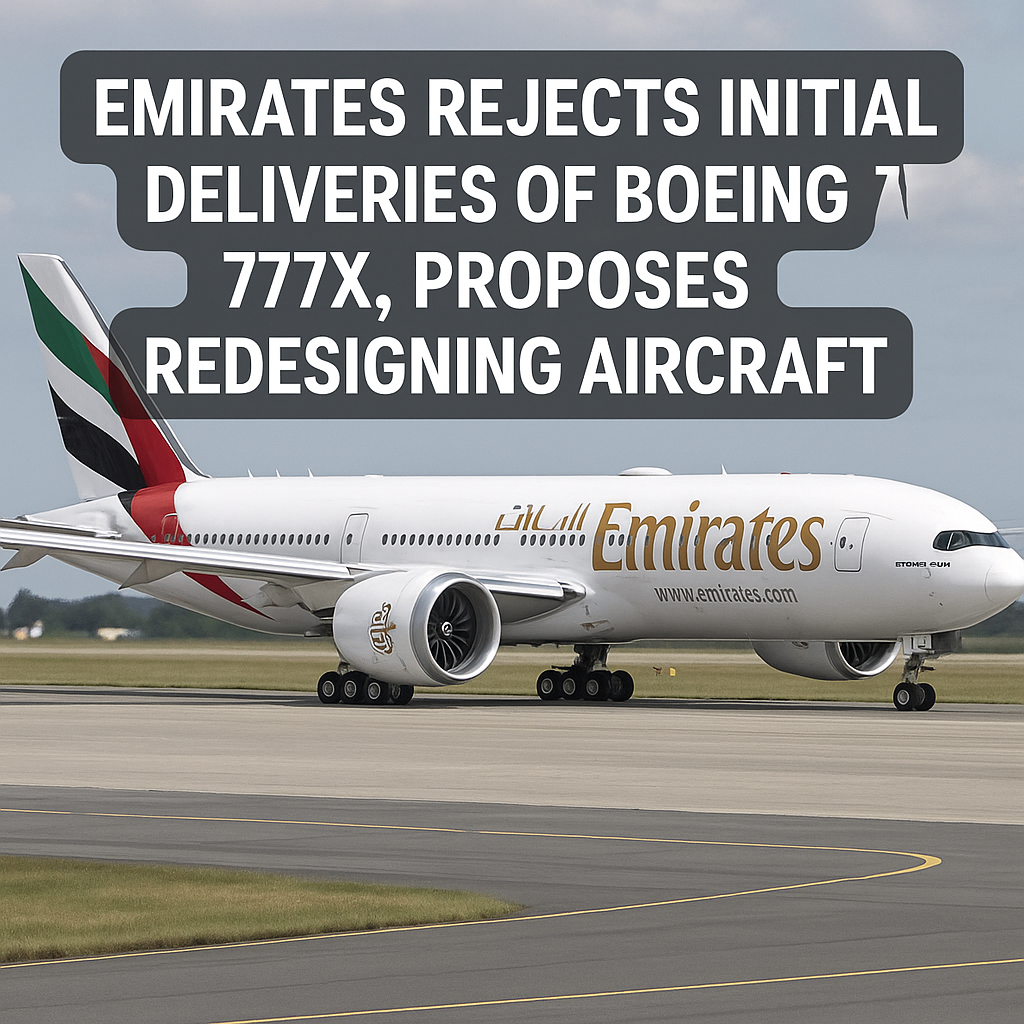
Emirates, the foremost operator of the Airbus A380, depends significantly on the Boeing 777X for its fleet renewal plans. The airline has placed orders for 270 Boeing 777X aircraft, aiming to utilize them to gradually replace its older A380s. Nevertheless, the delivery of these planes has experienced considerable delays. Originally expected in 2020, the delivery schedule has now been postponed to 2027 at the earliest.
Emirates President Tim Clark has openly criticized Boeing regarding these delays. He has raised issues concerning the initial set of 777X airframes, manufactured in 2019, which have not yet entered service. These aircraft have experienced considerable design modifications, prompting doubts about their dependability. Clark has indicated that Emirates will reject these early airframes, implying they might be more suitable for scrap.
The delays have compelled Emirates to rethink its fleet strategy. Although the airline anticipates its first 777X delivery in the second quarter of 2027, Clark has cautioned that they may need to “draw a line in the sand” if more delays arise. This scenario emphasizes the difficulties airlines contend with due to the restricted options in the wide-body aircraft sector, primarily controlled by Boeing and Airbus.
Emirates has also evaluated the Airbus A350-1000 as a potential alternative, despite earlier criticisms of the aircraft. However, obtaining delivery slots for the A350-1000 presents its own hurdles. The ongoing challenges with the 777X highlight the intricacies and risks associated with fleet renewal for major airlines like Emirates.