This is undoubtedly an unusual period for competitive dynamics within the airline sector.
JetBlue trims five Newark routes effective July 2026
JetBlue is currently undergoing significant transformations in its operational network. With Spirit having recently ceased operations, JetBlue is shifting its attention towards Fort Lauderdale (FLL), an airport it believes it can establish as a legitimate hub. This shift is possible as Spirit was the leading airline in terms of traffic at the airport, with JetBlue holding the second position, and JetBlue is now swiftly filling the void left by Spirit.
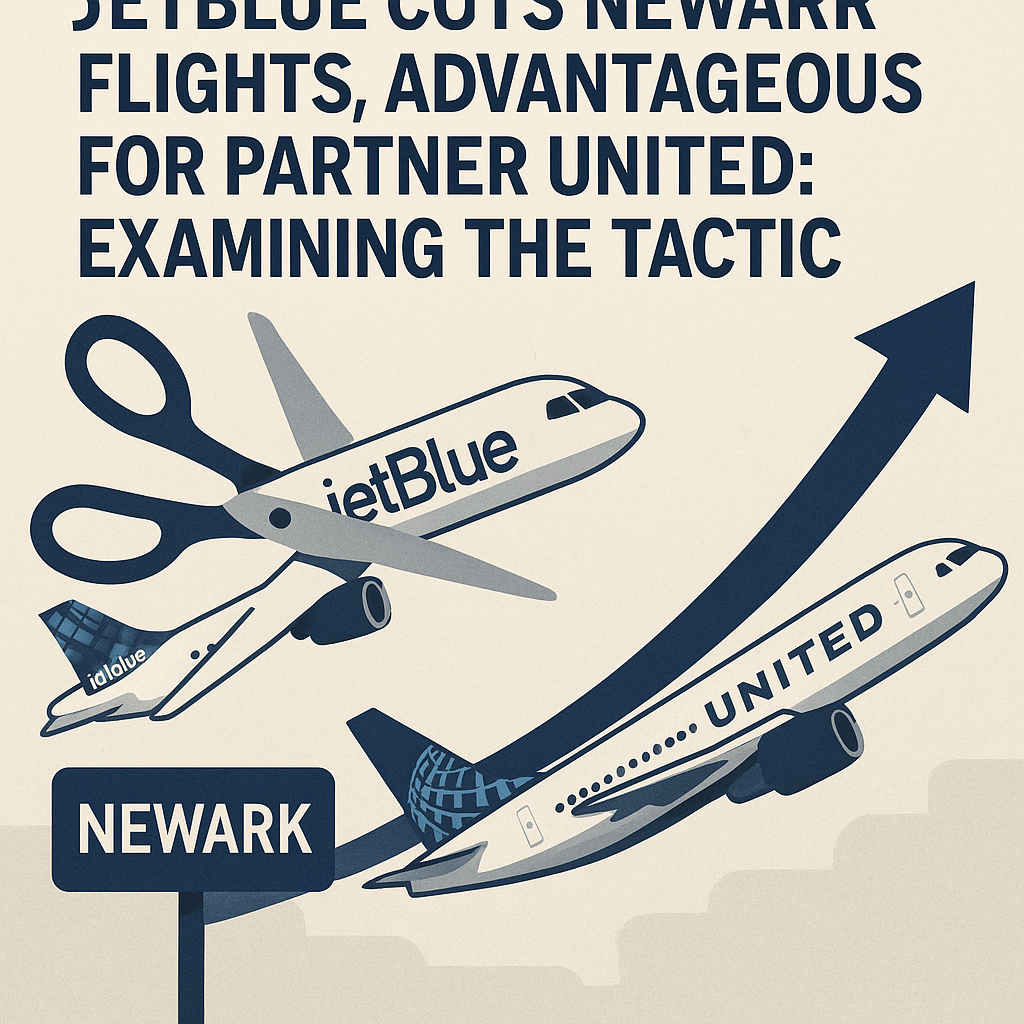
Naturally, expanding in Fort Lauderdale necessitates reductions in other areas, and it’s noteworthy which station is experiencing the most cuts. JetBlue has announced that starting July 8, 2026, it will cease flights from Newark (EWR) to Aruba (AUA), Cancun (CUN), Punta Cana (PUJ), Santo Domingo (SDQ), and Tampa (TPA).
These cuts represent nearly half of the year-round destinations offered by the airline from the airport, with the remaining routes being Fort Lauderdale (FLL), Fort Myers (RSW), Las Vegas (LAS), Orlando (MCO), San Juan (SJU), Santiago de los Caballeros (STI), and West Palm Beach (PBI).
JetBlue is significantly reducing its operations at Newark Airport
Is this a rational decision, or should we be cautious?
It’s intriguing to observe JetBlue substantially reducing its service in Newark, particularly as the airline fortifies its collaboration with United, owing to the Blue Sky partnership between the two carriers.
On one hand, it seems entirely reasonable for JetBlue to cut back on Newark service:
– JetBlue can predominantly compete for spill traffic at Newark, hindering its ability to assert any sort of dominating presence there, along with pricing power.
– JetBlue isn’t exactly pursuing aggressive growth; thus, if the airline aims to expand in other areas, it must do so at the cost of current services.
– Ultimately, JetBlue’s primary airport within the New York area is Kennedy (JFK), making it logical for the airline to concentrate its efforts there.
Conversely, on some level, one might find this turn of events to be somewhat dubious (I’m not implying anything is actually amiss here, but I’m referring to perceptions):
– Spirit maintained a substantial presence at Newark, so not only has Spirit been removed as a competitor, but JetBlue’s withdrawal further solidifies Newark as a fortress hub for United, enabling the carrier to increase fares even further.
– If JetBlue and United were to contemplate merging, a lack of route overlap is something that regulators consider when assessing deal approvals, making JetBlue’s retreat from Newark potentially beneficial for that objective.
Once again, I’m not suggesting that any unethical behavior is taking place, as the regulations regarding airline coordination are quite clear. However, the situation certainly appears peculiar. Normally, one would expect a partnership to result in increased service to the hub of the partner airline. Yet here, we observe JetBlue making significant cuts, essentially granting United greater pricing power.
What is JetBlue truly gaining from this partnership?
Bottom line
JetBlue is drastically reducing its flights from Newark, terminating five of its 12 year-round routes. The rationale behind this is understandable, as JetBlue concentrates more on Fort Lauderdale in light of Spirit’s exit, seizing the opportunity to establish a genuine hub.
Nevertheless, it is somewhat atypical to witness an airline withdrawing from a partner hub to such a degree, and this move could enhance the long-term viability of any potential agreement between JetBlue and United.
The main factor here is clear and valid, but I remain curious about the extent to which “synergies” were taken into account.
What are your thoughts on JetBlue’s decision to cut Newark flights?