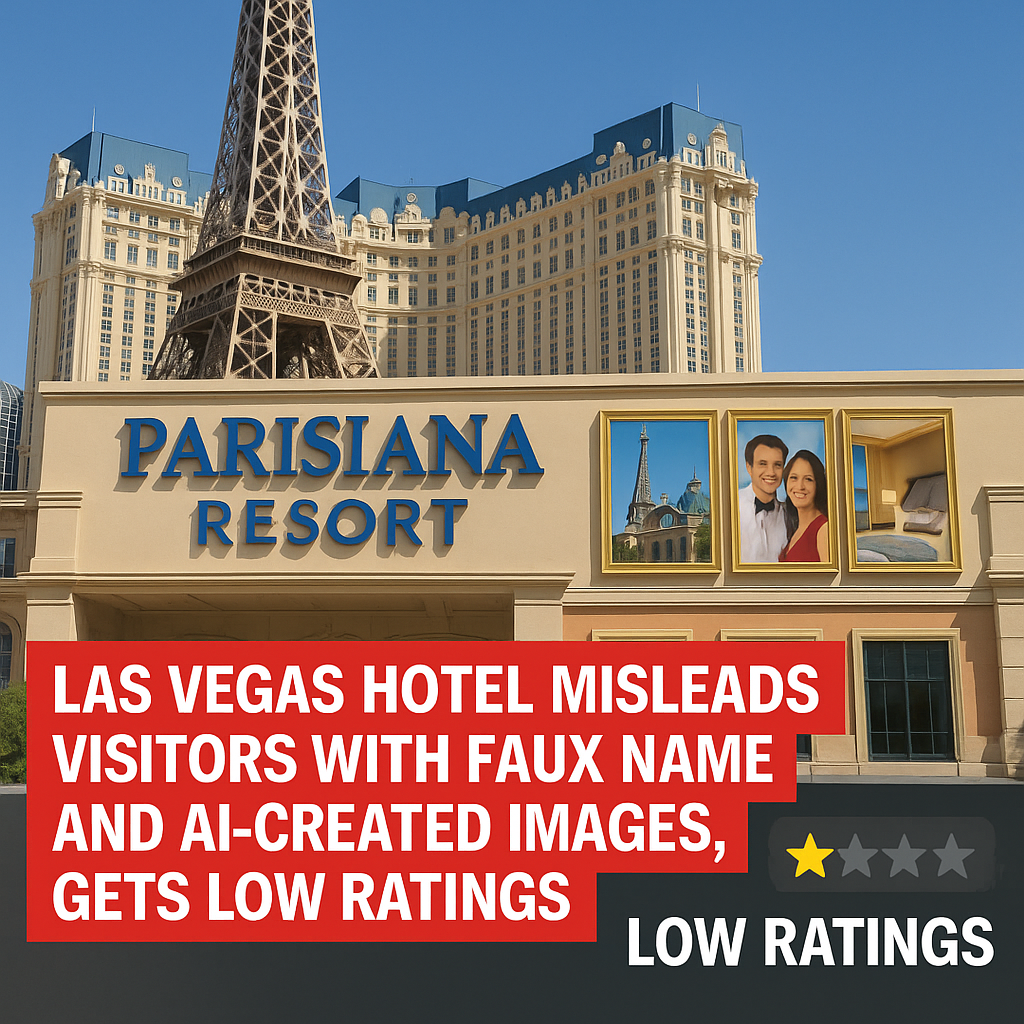
Las Vegas, a city frequently linked with sparkle, allure, and at times dubious business ethics, has recently witnessed a strange hotel scam that poses significant ethical and legal dilemmas. The scenario revolves around the OYO Hotel and Casino Las Vegas, a budget-friendly establishment that has been receiving lackluster reviews, and a so-called “new” hotel, Palette Las Vegas, which is entirely fabricated.
The OYO Hotel and Casino Las Vegas, situated at 117 E. Tropicana Avenue, ranks 240 out of 260 hotels in Las Vegas on TripAdvisor, reflecting a rather poor reputation. In efforts to draw in more guests, a listing for Palette Las Vegas surfaced on online travel platforms such as Booking.com. However, this “new” hotel is simply a digital illusion, featuring AI-generated visuals that portray a seemingly different location.
A TikToker recounted her experience of reserving Palette Las Vegas, only to discover upon arrival that the address directed her to the OYO Hotel. Following some confusion and a phone inquiry to the hotel, she learned that Palette Las Vegas is non-existent, and the listing was merely a marketing strategy to discern which advertisement would pull in more guests.
This discovery indicates a calculated attempt to mislead prospective patrons, prompting inquiries regarding the legality of such actions. The utilization of AI-generated images to form a deceptive image of a hotel exemplifies false advertising, and it remains uncertain whether online travel agencies are complicit or unwitting victims of this ruse.
In conclusion, OYO Las Vegas, grappling with unfavorable reviews, has turned to an unethical strategy by producing a fabricated hotel listing under the moniker Palette Las Vegas. This scam not only deceives consumers but also erodes trust in online booking services. It underscores the necessity for tighter regulations and oversight within the hospitality sector to avert such misleading practices from taking place.