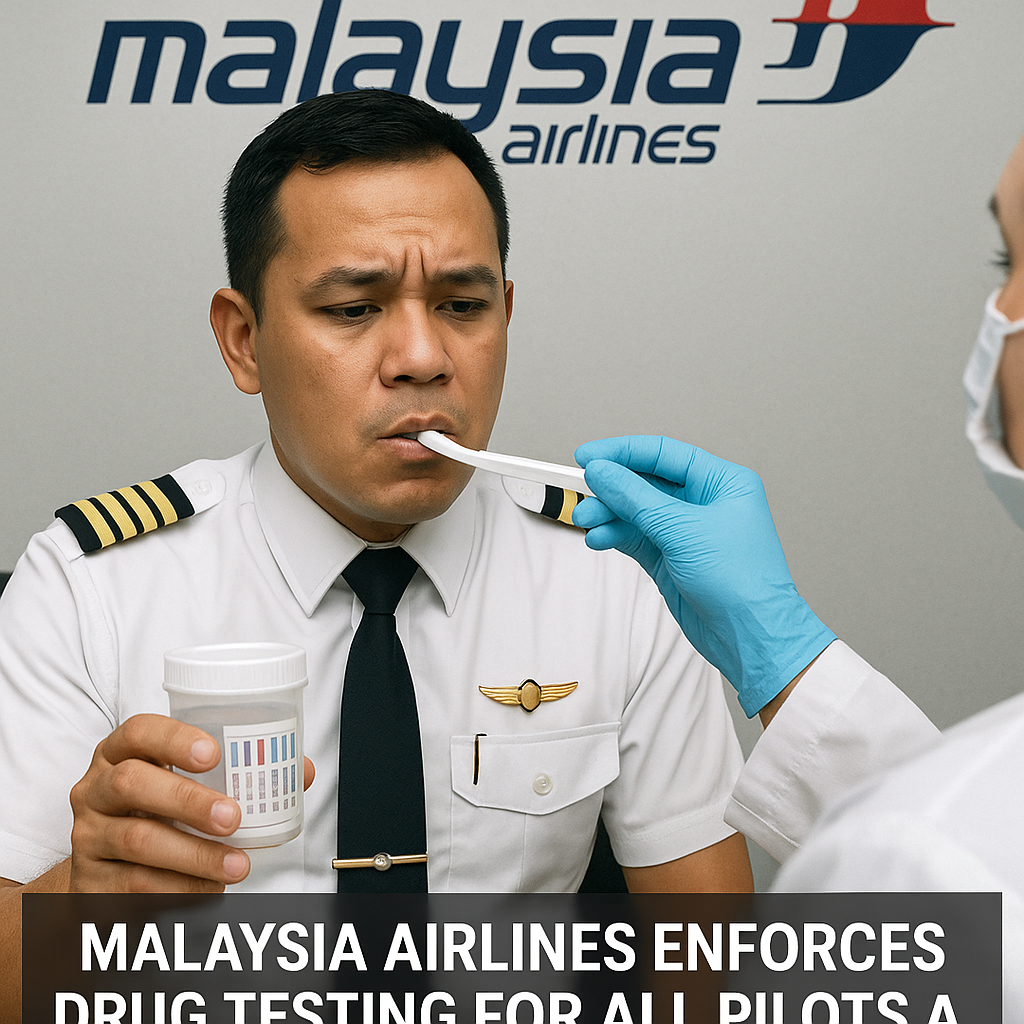
Several days ago, Malaysia Airlines attracted worldwide attention when one of its pilots was apprehended while attempting to smuggle more than 70,000 ecstasy tablets into Indonesia. In addition to this, he underwent a drug screening and tested positive for methamphetamine, ecstasy, and cocaine. Furthermore, he was discovered to be carrying a vial of clear urine, clearly attempting to circumvent any possible drug tests.
As one would anticipate, this incident paints a very poor picture for the airline, prompting serious actions to be taken promptly.
Malaysia Airlines implements compulsory pilot drug testing
Malaysia Airlines has revealed that it is enhancing its safety and fitness-for-duty protocols by introducing new drug testing procedures. As an immediate measure, the airline has initiated mandatory drug testing for all pilots employed by Malaysia Airlines.
The oneworld carrier’s 1,260 pilots are set to be screened by August 15, 2026. Any pilots who fail to complete the screening by the specified date will be prohibited from operating flights until they receive clearance, in line with the company’s protocols.
This immediate response signifies the airline’s significant concern regarding the recent occurrence involving one of its pilots, which the airline claims it categorically opposes.
Here’s a statement from Malaysia Airlines Group CEO Nasaruddin Bakar:
“Operational safety and crew fitness for duty are non-negotiable at MAG. We take any violation of our safety standards with utmost seriousness and have acted promptly to enhance mandatory drug screening among our active pilots. While this singular event does not reflect the professionalism of the vast majority of our workforce, we will persist in fortifying our protections to uphold the trust of our passengers and stakeholders.”
The airline asserts that these adjustments build on its current safety framework, which comprises pre-employment evaluations, Class 1 medical certifications for pilots, regular training, periodic alcohol and drug assessments, and obligatory pre-flight compliance checks encompassing licenses, medical certifications, training, and recency standards.
Malaysia Airlines is conducting immediate drug testing on all its pilots
Malaysia Airlines clarifies “high” pilot wasn’t piloting the aircraft
Malaysia Airlines has issued another update. Regarding the “high,” drug smuggling pilot, the airline has confirmed that the 39-year-old second officer was not actually piloting the flight from Kuala Lumpur (KUL) to Jakarta (CGK), following which he was apprehended.
Instead, he was positioned “in the cockpit jump seat as an observer and was not the pilot in command of the aircraft.” The airline also clarified that he had been off duty for two days preceding the incident, and that the flight was operated safely at all times by two qualified pilots.
One aspect that remains somewhat ambiguous is whether he was merely occupying the jump seat while traveling as a non-revenue passenger for personal motives, or if he was in that seat for a professional reason (deadheading, undergoing training flight, etc.)?
If he was simply traveling for leisure, it appears deliberate that he donned his uniform and attempted to appear “on duty,” ostensibly to reduce the likelihood of being detected.
Bottom line
Malaysia Airlines will promptly conduct drug tests on all pilots, with any pilots failing to complete the testing by August 15, 2026, being barred from flying. This follows the airline’s headlines after a uniformed pilot was caught trying to enter Indonesia with over 70,000 ecstasy pills, while also failing drug tests, confirming the presence of methamphetamine, ecstasy, and cocaine.
It is presumed that the overwhelming majority of Malaysia Airlines pilots are true professionals adhering to regulations, but there is curiosity regarding how many additional pilots may face consequences due to these test outcomes.