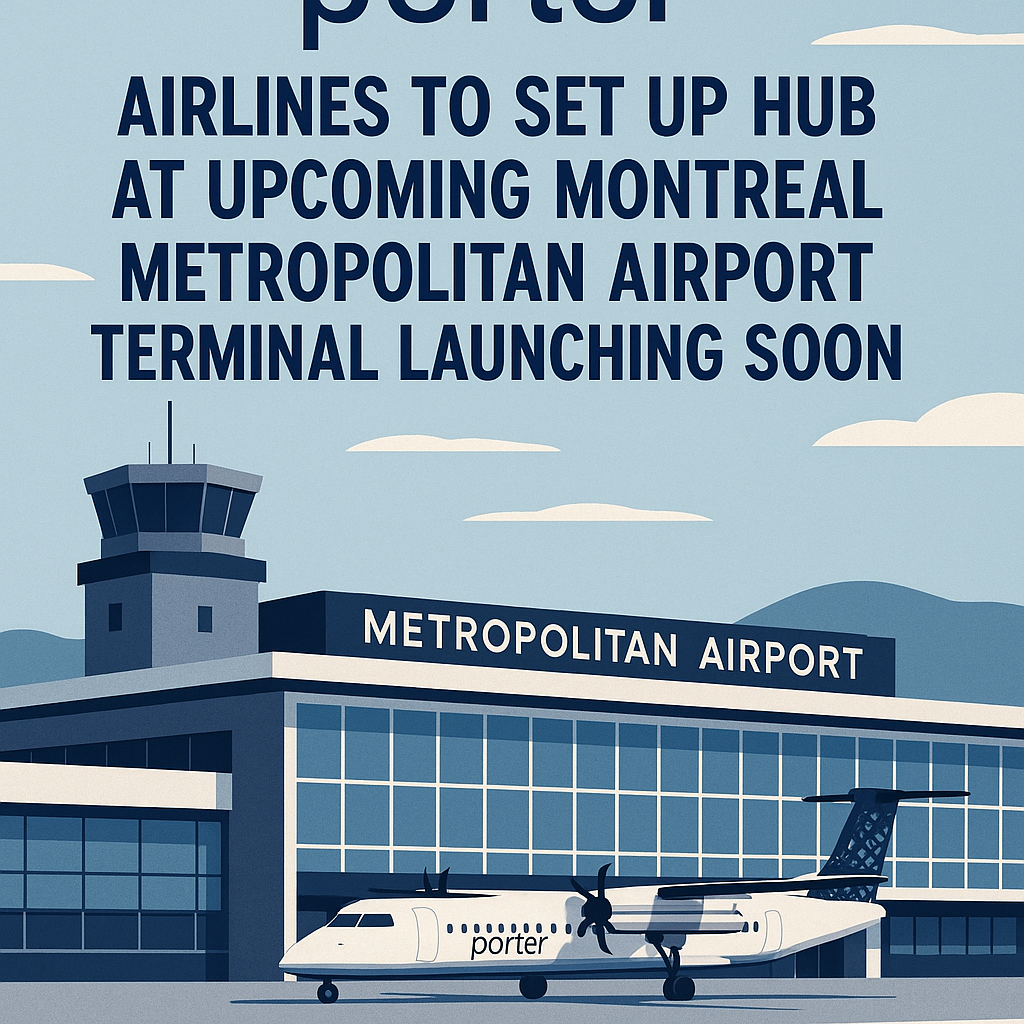
Over the last several years, Porter Airlines has been experiencing significant growth. While the airline has traditionally utilized De Havilland Dash 8-400 turboprop aircraft at Billy Bishop Toronto City Airport (YTZ), it is currently welcoming 75 Embraer E195-E2 jets, which will aid in its expansion across Canada and to additional destinations in the Americas.
One of the obstacles to growth is the challenge of acquiring gate space at major international airports while striving to provide a positive passenger experience. Porter has excelled in this regard at its hub in Billy Bishop Airport, but, as expected, it presents more difficulties at other airports.
In 2023, the airline made an innovative announcement regarding an investment in a new terminal at an alternative airport in Canada’s second-largest city. There is a thrilling update, as this project is now underway.
Porter expands to a second Montreal Airport
In recent years, Porter has been constructing a modern passenger terminal at Montreal Metropolitan Airport, the new name for what was formerly known as Montreal Saint-Hubert Airport. The airport retains its code of YHU, though officials are branding it as MET.
Initially, the terminal was set to open in late 2024, but, as is common with such projects, delays have occurred. The new expectation is that the terminal will begin welcoming its first passengers around one month from now, by June 15, 2026.
The new terminal is designed to accommodate over four million passengers each year. Spanning approximately 21,000 square meters (225,000 square feet), it features nine jet bridges, lounge-style seating for all travelers, along with food and beverage concessions and retail shops. Porter notes that the new terminal draws inspiration from the revitalization of Billy Bishop Airport, where Porter has been involved for about two decades.
Porter already services Montreal Trudeau Airport (YUL) and intends to continue its presence there while establishing a nationwide network from Montreal Metropolitan Airport.
The new terminal will also be accessible to other airlines, including Pascan Aviation, the only other carrier servicing the airport. Pascan Aviation operates regional flights throughout Quebec from this airport. There are also plans for Porter Airlines and Pascan Aviation to engage in codesharing, enhancing connectivity across Quebec.
Porter has already revealed intentions to introduce a dozen routes from the airport, including flights to both of its hubs in Toronto, and utilizing both of its aircraft types from the airport.
Will Porter thrive with a new airport in Montreal?
Porter is certainly thinking innovatively with its expansion strategy in Montreal.
On one hand, I believe Porter’s costs for utilizing the airport will be favorable, as that is typically the case at smaller airports, often with incentives. Additionally, it’s advantageous for Porter to provide an excellent passenger experience here, particularly regarding terminal seating and the convenience of using the airport due to its smaller size. People will likely appreciate this.
On the other hand, attracting travelers to a new commercial airport can be quite challenging. People are creatures of habit. Just observe how Paine Field (PAE) has struggled to develop, which I would classify as a broadly similar scenario.
Porter has frequently likened Montreal Metropolitan Airport to Billy Bishop Toronto City Airport. The primary difference is that Billy Bishop Airport offers real convenience for traveling to and from Toronto, while Montreal Metropolitan Airport is approximately the same distance from the city as the current airport.
It’s true that many people live near cities, and Porter emphasizes that the new airport has a favorable location for a significant segment of the local market. Will that suffice to render this initiative successful?
Another hurdle is that when competing with a major airline like Air Canada, possessing a vast network and numerous flights from a particular airport is crucial. By decentralizing operations across two airports, Porter may restrict its capability to expand its network in terms of connection opportunities, convenient rebooking, etc.
Ultimately, it’s difficult to gauge Porter’s overall success, considering the airline is not publicly traded. There are numerous rumors about the carrier’s profitability (or lack thereof), but public data is scarce.
Bottom line
In the near future, Porter Airlines will launch operations at Montreal Metropolitan Airport, formerly called Montreal Saint-Hubert Airport. This initiative is made possible by a new passenger terminal that Porter has invested in, which can accommodate over four million travelers annually.
The new terminal appears impressive, and it should provide a delightful passenger experience, particularly due to its smaller size. However, how effectively can the airline influence passenger behavior?
What are your thoughts on the new Montreal Metropolitan Airport passenger terminal and Porter’s plans?