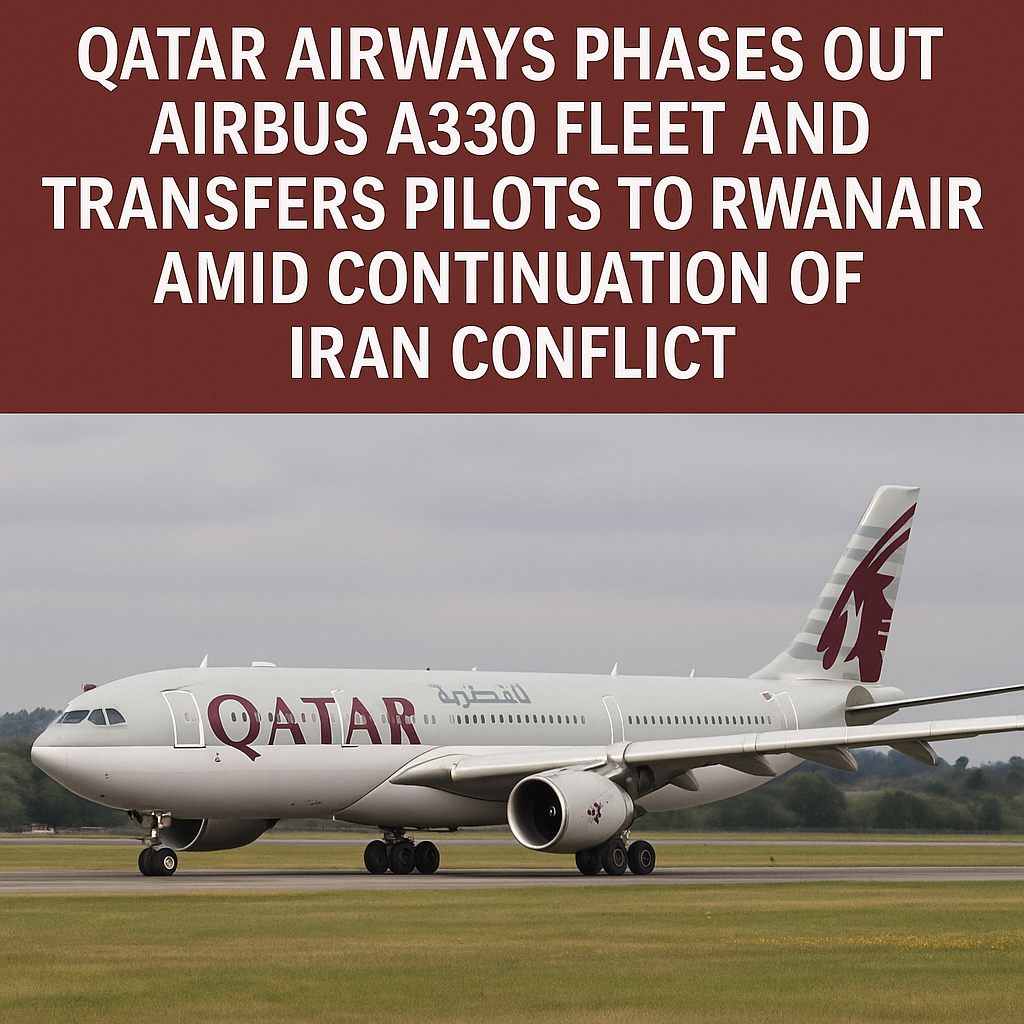
**Influence of the Iran War on Gulf Airlines: Strategic Changes by Qatar Airways**
Over the last year, airlines in the Gulf region have encountered considerable obstacles due to the persistent Iran war. The conflict has diminished local demand and impacted the airlines’ capacity to serve as vital links for international travelers. A notable number of passengers are now reluctant to transit through the Middle East, resulting in a significant drop in demand.
To counter these difficulties, Qatar Airways has enacted strategic changes, including the phased retirement of its Airbus A330 fleet. This fleet, which represented 7% of the airline’s capacity, was already approaching retirement prior to the war. The aircraft remained operational longer than anticipated because of delays in the arrival of new planes. Although additional A330s were leased from Oman Air, these aircraft did not enter service.
Qatar Airways is also tackling its excess of pilots by providing them with short-term secondment opportunities at RwandAir, a partner carrier. This initiative corresponds with RwandAir’s earlier acquisition of a former Qatar Airways A330 this year.
Despite increasing fuel costs, the airline has had difficulty raising fares as demand stays low. CEO Hamad Al-Khater has mentioned that transferring higher fuel costs to customers is a last resort due to the competitive market. Instead, Qatar Airways is concentrating on keeping competitive pricing to draw in passengers.
In summary, Qatar Airways is maneuvering through a tough landscape by phasing out older aircraft and efficiently managing pilot resources. The airline’s ability to adapt will be essential as it faces decreased demand and elevated operational expenses. The fate of its A380 fleet is still uncertain, as the airline continues to assess its fleet strategy.