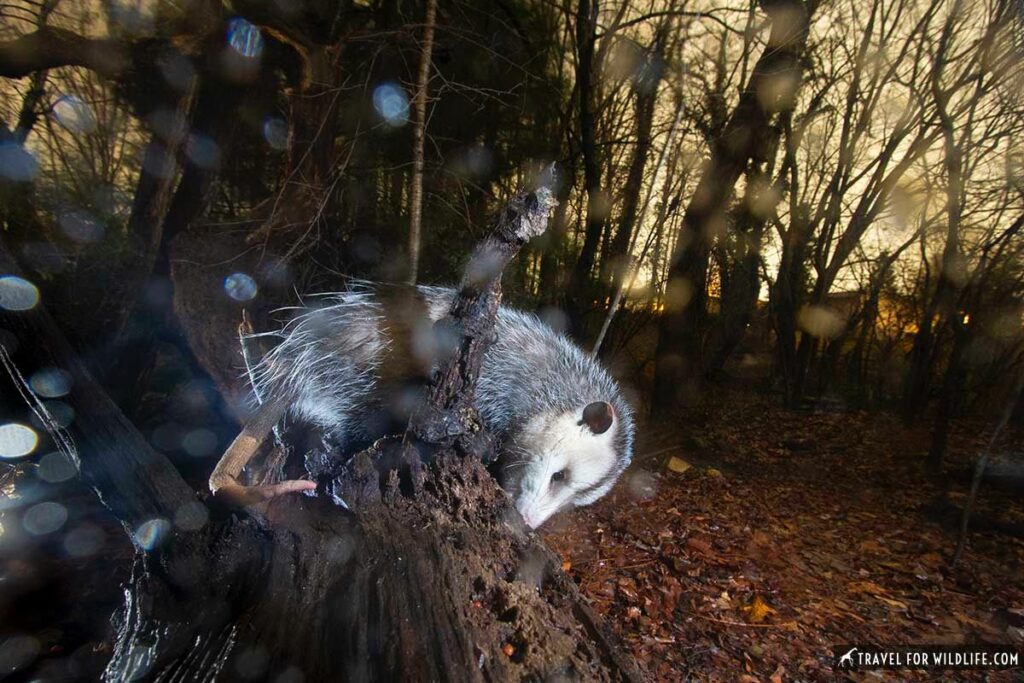
Virginia opossums (Didelphis virginiana) represent the sole marsupials found in the United States, frequently remaining unobserved due to their nocturnal behavior. Nonetheless, camera traps have recorded intriguing activities, including the ways opossums utilize their tails.
The tail of the opossum is prehensile, enabling it to transport nesting materials such as leaves, twigs, and corn husks to their shelters. The technique consists of grasping leaves with their mouths, transferring them to their front limbs, then to their hind limbs, and ultimately curling their tail around the bundle to carry it. This behavior has been documented by trail cameras, revealing opossums collecting leaves to cushion their dens, which are often occupied burrows from other creatures like woodchucks.
Opossum tails also provide assistance in maintaining balance when ascending trees. While juvenile opossums can suspend themselves by their tails, adults are too heavy for this and instead rely on their tails for stability on branches.
It’s crucial to recognize that opossum tails are not for gripping. Grabbing an adult opossum by the tail may lead to significant injury, such as dislocation of tail bones. For additional details regarding opossums, you may refer to the article “Possum vs Opossum: What’s the Difference?” on Travel4Wildlife.