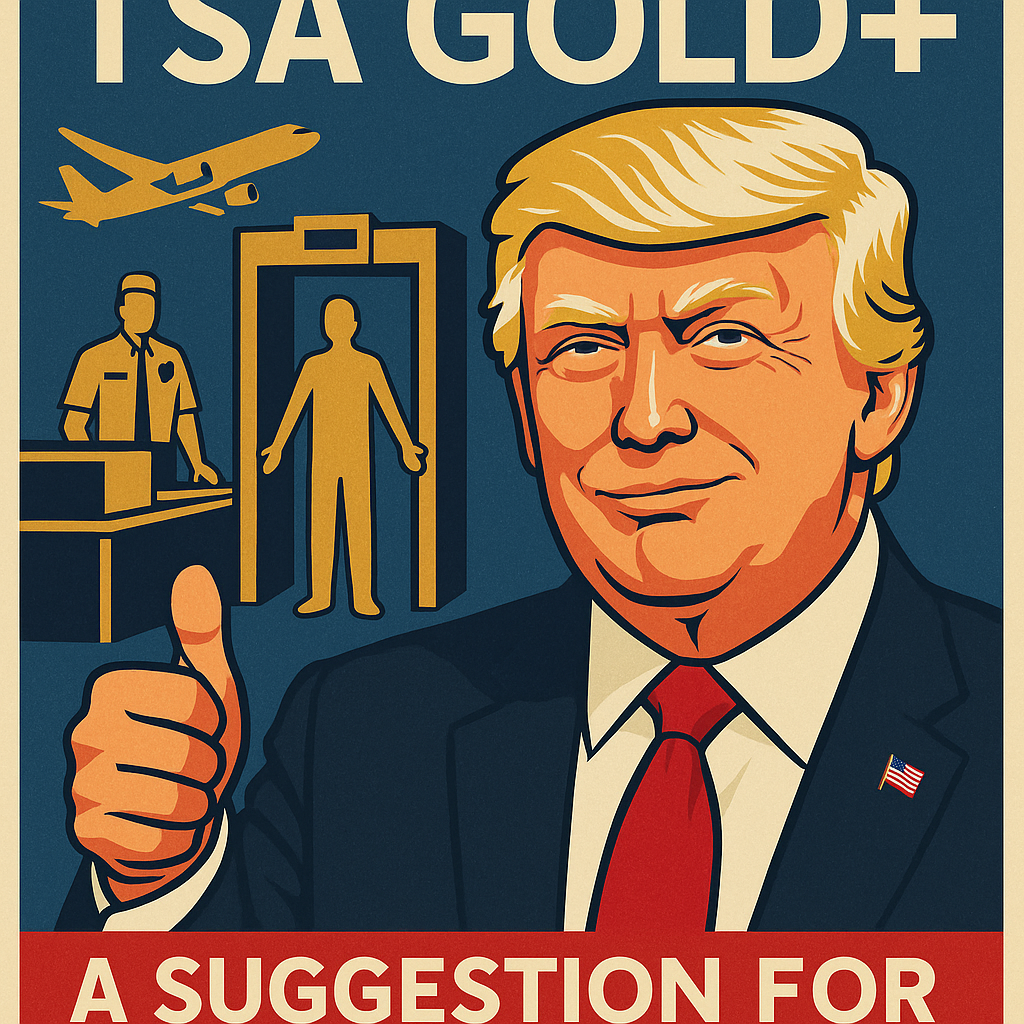
Several months ago, it was disclosed that President Trump intended to privatize airport security as much as possible, which involved reducing funding for the Transportation Security Administration (TSA). Although the idea of privatized airport security in the United States isn’t completely novel, due to the existing Screening Partnership Program (SPP) in operation at approximately 20 airports, the announcement brought forth a new initiative: TSA Gold+.
TSA Gold+ represents the newest iteration of the privatized airport security concept. But what distinguishes this program from the standard TSA, and what implications does it hold for travelers?
**The Essentials of the TSA Gold+ Program**
TSA Gold+ entails private contractors assuming more TSA responsibilities at airports. The initiative is projected to launch in 2027 at Tampa (TPA), Charleston (CHS), and Des Moines (DSM), representing the initial airports to adopt this new framework.
The TSA Gold+ webpage is packed with catchphrases, dubbing it “the future of aviation security” via robust public-private collaborations. It pledges to unlock innovation, enhance screening capacity, and deliver top-tier security and customer experiences. However, the website provides scant specifics regarding the advantages of TSA Gold+.
The program seeks to modernize aviation security by integrating the Screening Partnership Program with TSA’s innovation capabilities, enabling leading industry players to oversee technology and the screening workforce. In spite of these assertions, the website fails to offer significant proof of how these modifications will benefit travelers.
**Can Anyone Simply Clarify the Benefits?**
The TSA Gold+ website’s declarations of a “premier customer experience” and “state-of-the-art technology” provoke questions. Why do privatized security practices yield these benefits, and why aren’t all airports equipped with the same technology?
The confusion arises from the assumption that introducing intermediaries doesn’t inherently boost efficiency. Private partners are likely in it for profit, so how does this improve efficiency? The TSA continues to supervise the program, so how do taxpayers and travelers gain? Is the initiative cheaper because contractors earn less than TSA agents? Why do private contractors access advanced technology while current checkpoints do not?
**Bottom Line**
The Trump administration’s initiative to privatize airport security is being executed under the TSA Gold+ program, subcontracting security duties to contractors while retaining TSA oversight. Despite assertions of advanced technology and outstanding service, the program’s advantages remain ambiguous. The promotional narrative seems to be superficial, leaving many perplexed about the real benefits of TSA Gold+.