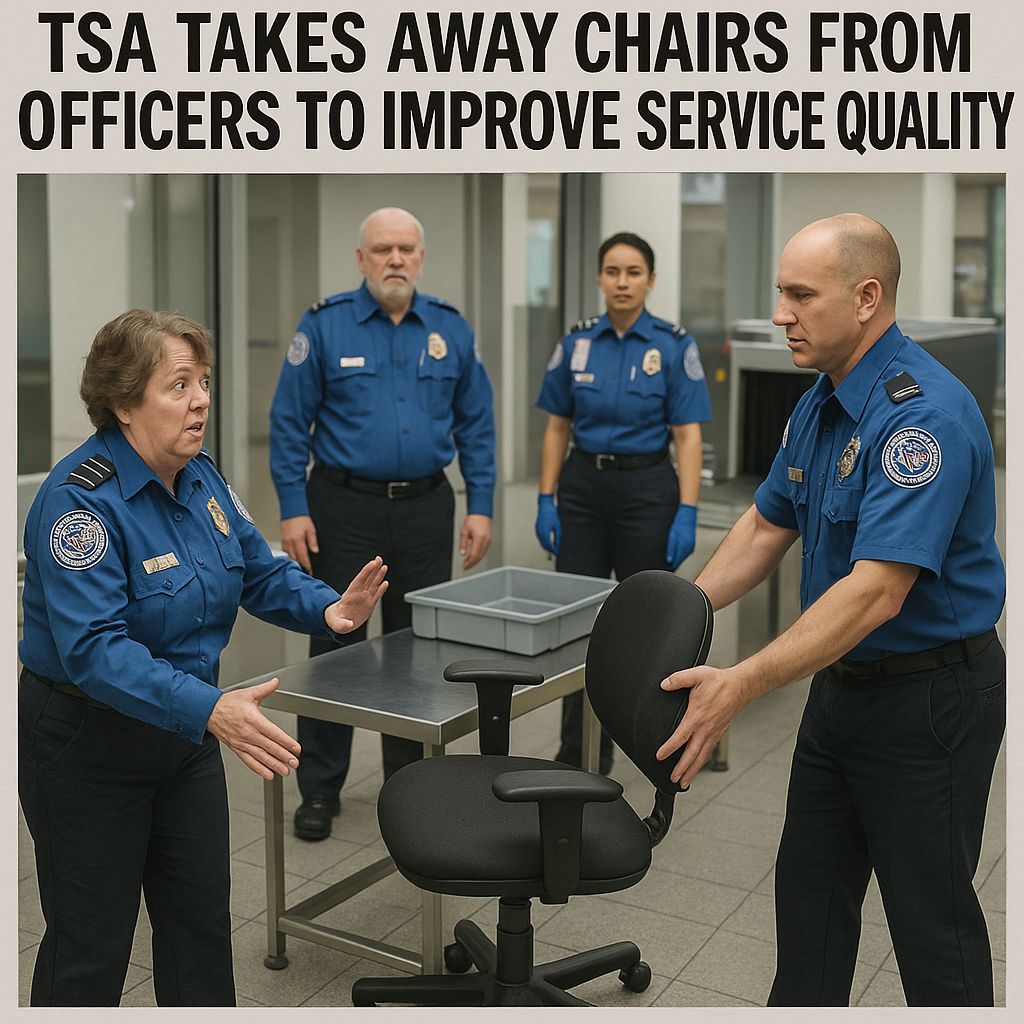
The Transportation Security Administration (TSA) has recently enacted a policy modification that forbids officers from sitting during ID checks at airport security checkpoints. This measure is reportedly designed to improve security and customer service by keeping officers vigilant and attentive. Nonetheless, the move has ignited debate, especially with the American Federation of Government Employees (AFGE), the union that advocates for TSA personnel.
Traditionally, TSA officers conducting ID checks have been seated due to the fixed nature of their responsibilities. The decision to eliminate chairs was made without prior notice to the union, resulting in dissatisfaction among employees. A TSA representative mentioned that this adjustment aims to bolster security and foster a friendly atmosphere for travelers. They underscored the importance of officers fulfilling fitness standards to effectively execute their tasks.
On the other hand, the AFGE contends that chairs are crucial for providing necessary ergonomic assistance for officers who spend their shifts standing and walking on firm surfaces. The union believes that removing chairs shows a lack of regard for employee rights and safety. They are urging local leaders to express their opposition to congressional delegates.
The ruling has faced skepticism, with critics challenging the need and reasoning for prioritizing such a change. While standing is typical in upscale service settings, the TSA’s responsibilities are quite different, given that officers engage with a constant stream of travelers. The union’s reaction underscores the necessity for fundamental comfort and safety considerations for TSA staff.
In summary, the TSA’s choice to remove chairs for ID-checking officers has resulted in a confrontation with the union, raising concerns about employee well-being and the real effect on security and hospitality.