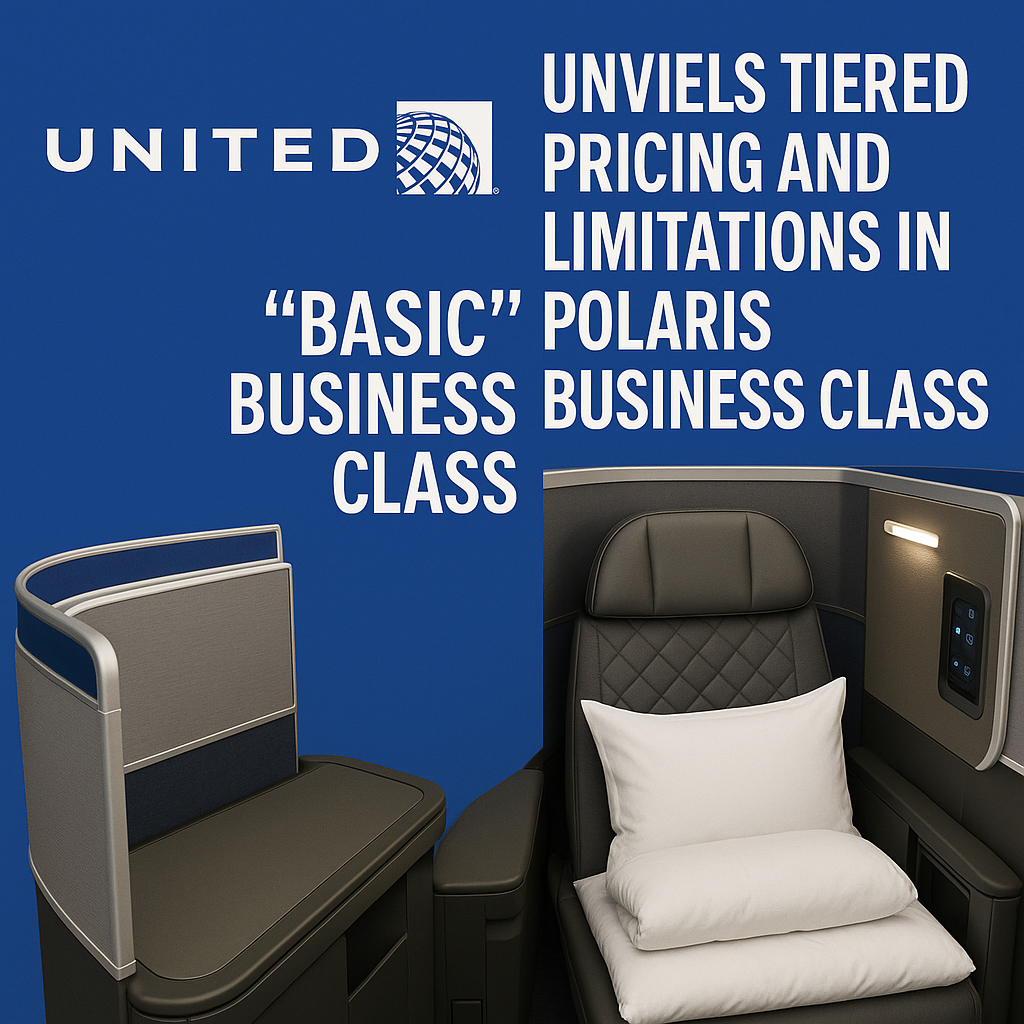
**United Airlines Unveils Tiered Premium Cabin Pricing**
United Airlines has revealed a major update to its pricing model, rolling out tiered fares in its premium cabins. This adjustment features the launch of “basic” premium cabin tickets, a development that has been awaited by industry analysts for quite a while.
**United’s Updated Fare Model**
The newly implemented tiered fare scheme is designed to offer passengers a greater variety of choices to customize their flying experience based on their individual needs. United will provide three fare levels in its premium cabins: basic, standard, and flexible. This arrangement will be accessible on multiple flights, encompassing long-haul international, transcontinental, and selected Hawaii routes. The introduction is set to commence in April 2026 in specific markets, with intentions to broaden throughout the year.
**Basic Premium Cabin Fare Limitations**
Customers selecting basic fares in United’s Polaris business class will encounter a number of limitations:
– An additional fee will apply for seat selection.
– Travelers will be permitted one complimentary checked bag instead of the typical two.
– United Club access is included, though entry to the United Polaris Lounge is not.
– Changes and refunds will be disallowed, in contrast to standard and flexible fares.
– Upgrading to the United Polaris Studio for a fee will not be an option.
Comparable limitations will apply to basic Premium Plus premium economy tickets, such as fees for seat selection, restricted checked baggage allowances, and rigid ticket options.
**Impact on Passengers**
The launch of basic premium cabin fares is indicative of a larger trend within the airline sector, where airlines seek to diversify their offerings to capture a broader range of customers and promote upselling to higher fare levels. Although these fares are advertised as providing increased choices, they frequently lead to the reclassification of current lowest fares as basic, with existing services becoming additional costs.
**Industry Landscape and Future Trends**
United’s initiative aligns with similar tactics from other airlines, like Lufthansa, which recently rolled out basic business class fares. This trend signifies a robust demand for premium leisure travel, despite the slow recovery of business travel. Airlines are adopting these approaches to optimize revenue from leisure passengers willing to invest in premium experiences without the elevated expenses traditionally linked with business travel.
The introduction of basic premium cabin fares may also impact the dynamics of joint ventures and alliances, especially in transatlantic regions. It remains uncertain how the adjustments will affect elite status advantages and award bookings.
**Summary**
The launch of basic premium cabin fares by United Airlines signals a notable transformation in its pricing approach, in line with wider industry movements. While this presents travelers with additional options, it also represents a deliberate strategy to boost revenue by encouraging guests to choose higher fare classes to maintain current benefits. As this rollout advances, it is probable that other leading US airlines will implement similar fare arrangements.