Donald Trump is reportedly set to re-enter the airline sector, though not in the conventional realm of passenger services. His emphasis seems to be on bolstering the U.S. government’s deportation initiatives via Immigration and Customs Enforcement (ICE). The Trump administration has been pursuing the acquisition of its own aviation assets to streamline deportations, a strategy that aligns with Trump’s vow to markedly boost the rate of deportations.
Traditionally, the U.S. government has depended on commercial airlines for deportation flights, contracting airlines such as Avelo Air, Eastern Air Express, GlobalX Air, Omni Air International, and World Atlantic Airlines. These contracts have created a reliable source of income for the participating airlines. However, the administration’s objective of removing one million undocumented immigrants each year calls for a significant enhancement of deportation capacity.
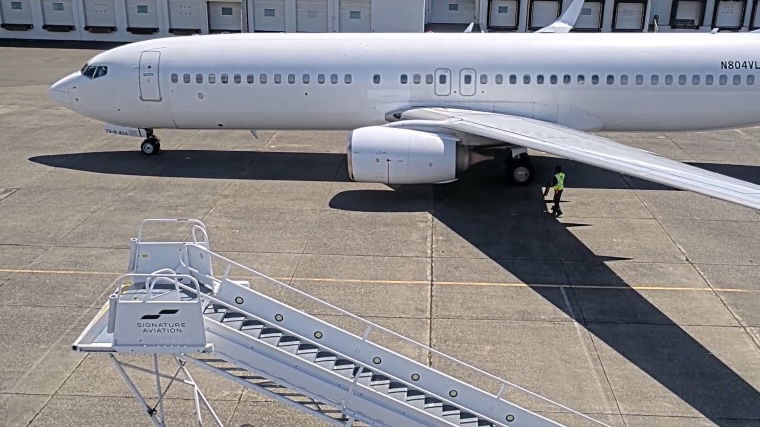
In order to achieve this target, the Department of Homeland Security (DHS) has finalized an agreement to procure six Boeing 737 jets at a total expense of $140 million. This move forms part of a larger plan to double the number of deportations each month. The contract is with Daedalus Aviation, a firm associated with Salus Worldwide Solutions, which holds a substantial contract with DHS for assistance with voluntary self-deportation.
A spokesperson for DHS highlighted the financial efficiency and innovative nature of this initiative, noting that it would save taxpayers $279 million by improving ICE’s operational productivity. Presently, ICE charters between 8 and 14 aircraft for deportation operations, facilitating roughly 15,000 deportations each month. The new fleet is anticipated to boost this capacity, addressing overcrowding in detention facilities.
The choice to acquire its own aircraft has ignited discussions about the advantages of the government venturing into the airline sector. Critics suggest that outsourcing to commercial airlines might prove more effective, as these companies possess expertise in flight operations. Furthermore, chartering aircraft provides flexibility to adapt capacity according to demand, a benefit that may be forfeited with government-owned planes.
Despite these objections, the Trump administration has secured considerable financial support for ICE, with a $75 billion budget that allocates $30 billion directly for deportation initiatives. This funding boost aids the acquisition of aircraft and other essential resources for the administration’s deportation ambitions.
While the efficacy and cost-saving potential of this strategy continue to be points of contention, the Trump administration’s dedication to enhancing deportation capabilities is evident. The procurement of a dedicated fleet of aircraft marks a crucial development in achieving the administration’s immigration policy goals.