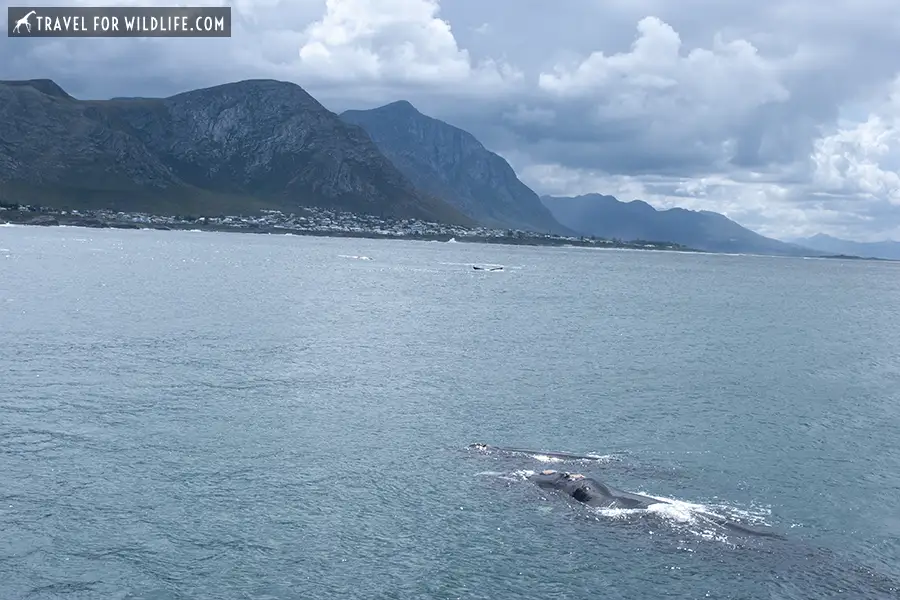
Whale Observation in Hermanus, South Africa: An Exceptional Wildlife Adventure
Whale observation in South Africa is famed for being among the finest globally. From June to November, sizable groups of Southern Right Whales (Eubalaena australis) arrive along the southern coast of South Africa to breed and give birth. The coastal town of Hermanus in the Western Cape serves as a prime location for this whale activity, providing an unforgettable encounter.
Southern Right Whale Migration in South Africa
During the Austral summer (December to May), Southern Right Whales inhabit the frigid polar regions of the Southern Hemisphere, where they feed on krill. In winter (early June through November), they migrate to the shallow coastal waters around Southern Africa, South America, and Australia. This season signifies the height of whale-watching in Hermanus.
In Hermanus, male whales make their appearance in June, followed by the females. They engage in mating within the coastal waters of the South African Cape. The last arrivals are the expectant females, who depart with their calves once the young are robust enough to swim back to the Antarctic waters for feeding on krill.
Prime Locations for Whale Watching in Hermanus
Hermanus, which overlooks the expansive waters of Walker Bay, stands out as one of the top spots to observe Southern Right Whales along the South African coastline. Guests can watch from the cliffs in the town center or take a whale-watching boat excursion to gain insights into whale behavior.
Whale Behavior and Activities
In Walker Bay, whales engage in courting, playing, and resting. Visitors might observe behaviors including spy-hopping (where whales lift their heads out of the water to survey their surroundings), lobtailing (smacking the water with their tails), and even full breaches (leaping entirely out of the water). Rarely, a whale birth might be witnessed.
Additional Wildlife in Hermanus
Besides Southern Right Whales, Hermanus is also home to Humpback and Bryde’s whales, common dolphins, bottlenose dolphins, Cape Fur seals, and various marine birds such as African black oystercatchers and African penguins. Orcas have also become increasingly frequent along the South African coastline, and Clawless Cape otters can be seen foraging among the kelp.
Identifying Southern Right Whales and Humpback Whales
Southern Right Whales can be recognized by the callosities on their backs, a V-shaped spout, and a light-colored belly. They do not possess a dorsal fin. Conversely, Humpback Whales display a small dorsal fin and extensive pectoral fins.
White Whales
About 5% of Southern Right Whales are born with white coloration. These white calves are not albino but showcase a condition known as grey morphism and tend to darken as they mature.
Varieties of Whale Watching Tours in Hermanus
Hermanus provides both land-based and boat-based whale-watching tours. Land-based excursions are perfect for those susceptible to seasickness, as whales often approach the shore in Walker Bay. Visitors can stroll along the coastline or join a tour that features visits to prime viewing locations and the Whale House Museum.
Boat-based tours are in high demand, with operators offering voyages on catamarans designed to reduce disruption to marine life. These tours provide clear views and are equipped with environmentally friendly engines.
Whale-Watching Day Trips from Cape Town
For travelers in Cape Town, whale-watching day trips to Hermanus are offered. These excursions usually last 7-8 hours and may include stops at wine estates and penguin colonies.
Conclusion
Hermanus is an essential destination for whale lovers during the whale season. Its closeness to Cape Town makes it an accessible and fulfilling experience for anyone eager to witness these magnificent creatures in their natural setting.